


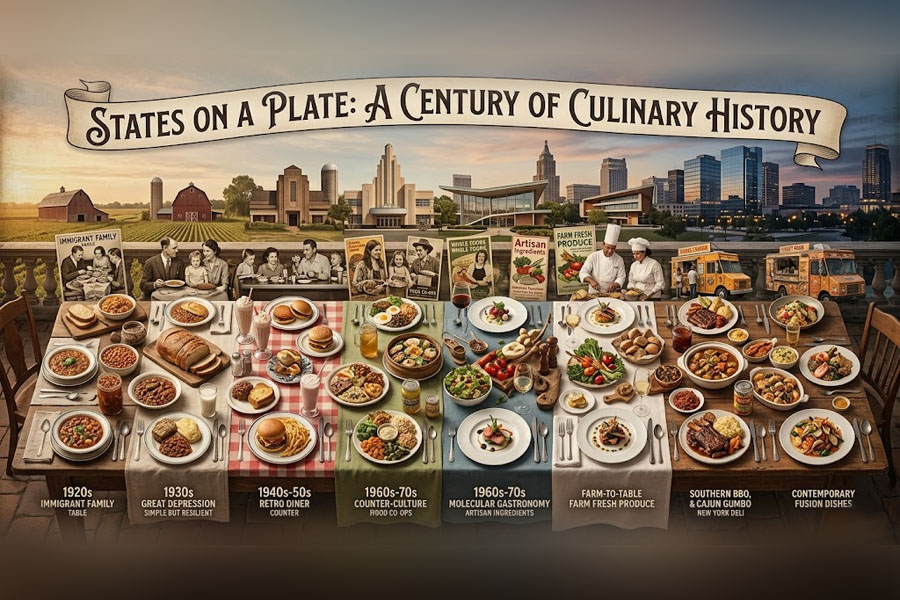
American cuisine is a fascinating chronicle of migration and cultural adaptation, where food serves as a primary way to understand a complex heritage. By looking at a single plate, one can trace the intersections of African vegetable traditions, European techniques, and Native American seasonings.
Fried Green Tomatoes: A Northern Invention turned Southern Icon

Contrary to popular belief, fried green tomatoes did not originate in the South. Culinary historians have traced the dish to the Northeast and Midwest, specifically to Jewish and kosher cookbooks of the late 19th and early 20th centuries. One of the earliest records appears in “The International Jewish Cookbook” (1919), which suggests the dish as a breakfast meal.
The use of unripe tomatoes was born from practicality in Northern climates where the growing seasons were shorter; when frost arrived, any fruit left on the vine had to be harvested and cooked green to avoid waste. The dish only solidified its status as a “Southern staple” in the 1990s, following the popularity of the movie “Fried Green Tomatoes”.
Evolution over 100 years: A century ago, this was a modest way to utilize surplus produce at home. Today, it is a gourmet highlight in Southern restaurants, often elevated with pimento cheese or spicy remoulade sauces.
Quick Recipe:
- Slice green tomatoes into thick rounds.
- Dredge them in a mixture of flour, cornmeal, and egg batter.
- Fry until golden and serve hot with salt.
Gumbo: The African Heart of Louisiana
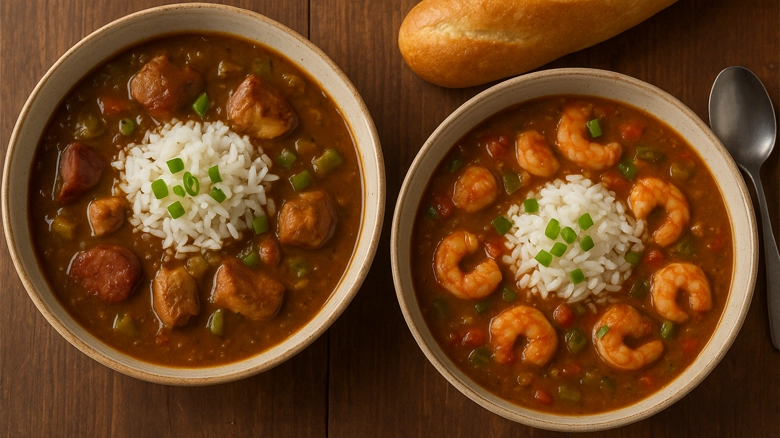
Gumbo represents the intersection of African, Native American, and European cultures. The name itself is derived from the West African Bantu word “ki ngombo” (or “gombo”), which means okra. The dish is a literal melting pot: the okra is African, the thickener (filé powder from sassafras leaves) is Native American, and the roux technique is European.
The first known reference to gumbo in New Orleans dates back to 1764 in the interrogation records of an enslaved woman named Comba. For decades, the contributions of Black cooks were overlooked by writers who tried to link gumbo exclusively to French bouillabaisse—a connection that modern historians find incorrect.
Evolution over 100 years: In the early 20th century, gumbo was a lighter, more seasonal dish. Cooks used okra in the summer and substituted filé powder during the winter when okra was out of season. In the last 30–40 years, largely influenced by Chef Paul Prudhomme in the 1980s, the standard has shifted toward an extremely dark roux, resulting in a much thicker, smokier stew.
Texas Sausages: The Legacy of German and Czech Butchers
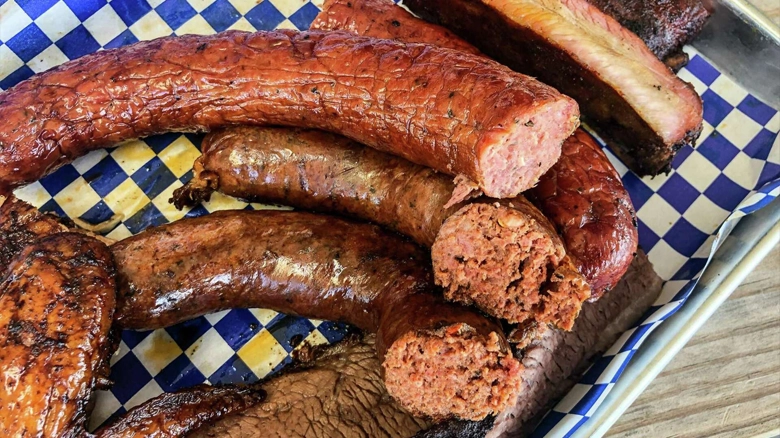
Modern Texas barbecue was heavily influenced by German meat markets and Czech immigrants who began arriving in the 1850s. These settlers brought centuries-old traditions of curing and smoking meat to Central Texas. They opened butcher shops where they used beef and pork scraps to make sausages, ensuring nothing was wasted.
Because African American and Mexican American cotton pickers were often barred from dining in restaurants in the early 1900s, they would buy fresh smoked meats from these markets and eat them directly on butcher paper with their bare hands. This created the iconic Texas tradition of serving barbecue without utensils or sauce.
Czech vs. German Traditions:
- Czech Sausage: Known for a coarse, rustic texture and a bold garlic-forward flavor, seasoned with caraway seeds and marjoram.
- German Sausage: Often made with pure beef, these are finely ground and milder, using black pepper and mustard seeds.
Evolution over 100 years: Once considered “food for the poor” made from meat remnants, these sausages are now crafted using high-quality USDA meat. While traditional markets like Kreuz Market still serve meat without sauce or silverware to respect the original flavor, modern pitmasters often experiment by adding cheddar cheese and jalapeños to the mix.