


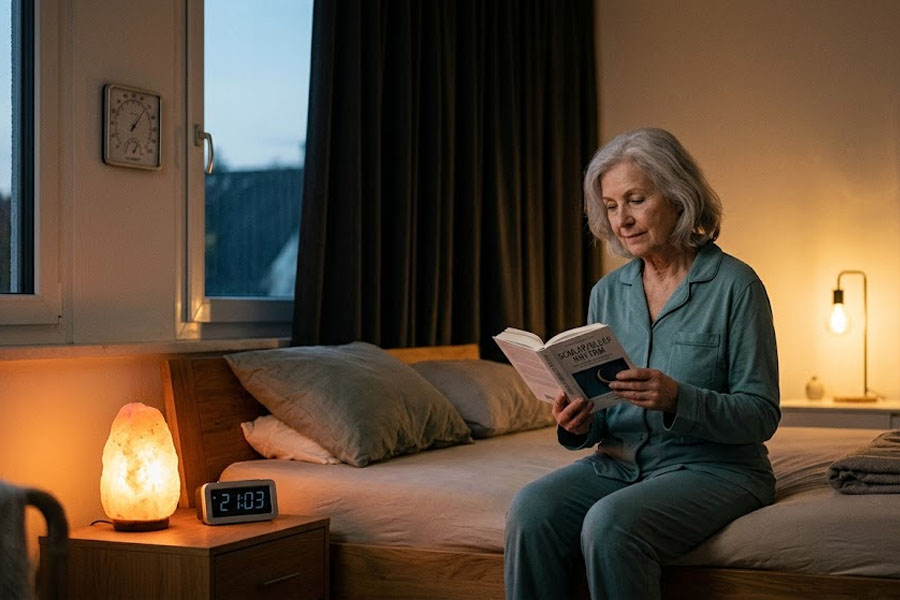
As the years pass, our “sleep architecture” undergoes a significant transformation. For those over 50, the stages of deep, restorative sleep often diminish, and the REM (Rapid Eye Movement) phase becomes more fragmented. This leads to the common complaint of “light sleeping,” where the slightest noise can trigger full wakefulness. While pharmaceutical aids are a common go-to, they often mask the problem rather than solving it. The true solution lies in recalibrating your biological clock.
1. The Science of Aging Sleep: Why Pills Aren’t the Answer
Most conventional sleeping pills are sedatives that “knock out” the brain rather than inducing natural sleep. This distinction is crucial because sedation is not the same as restoration.
-
Suppression of Vital Phases: Medication often bypasses the deep NREM sleep necessary for the brain’s glymphatic system to clear out metabolic waste.
-
The “Hangover” Effect: In older adults, the liver processes medication more slowly, leading to daytime grogginess, increased fall risks, and impaired memory the following day.
2. Mastering Your Circadian Rhythm
Our internal 24-hour clock is governed by “Zeitgebers” (time-givers), primarily light. As we age, our sensitivity to these cues can weaken.
-
The Power of Morning Sunlight: Exposure to bright natural light before noon is the most effective way to regulate melatonin production for the following evening. It tells your brain exactly when the day has started, anchoring your internal clock.
-
Strict Consistency: The brain thrives on predictability. Going to bed and waking up at the same time—even on weekends—strengthens the neural pathways associated with sleep onset.
3. Dietary Interventions for Better Rest
What you consume throughout the day acts as the building blocks for your sleep hormones.
-
The Role of Magnesium: Often called “Nature’s Relaxant,” magnesium helps lower cortisol (the stress hormone). Incorporating leafy greens, nuts, and seeds into your dinner can soothe the nervous system.
-
The Caffeine Half-Life: The metabolism of caffeine slows down significantly with age. A mid-afternoon latte can stay in your bloodstream for up to 10 hours, interfering with your ability to fall into a deep sleep.
4. Creating a Sleep Sanctuary
Environmental triggers play a massive role in age-related sleep maintenance.
-
Temperature Regulation: The body needs to drop its core temperature by about 1-2 degrees to initiate sleep. A room that is too warm (above 22°C/72°F) is a leading cause of middle-of-the-night awakenings.
-
Digital Sunset: Implement a “Digital Sunset” at least 60 minutes before bed. The blue light emitted by tablets and phones tricks the brain into thinking it is midday, effectively hitting the “pause” button on melatonin release.
Final Thoughts
Quality sleep at 60 can be just as refreshing as at 30, provided you treat it as a skill rather than a given. A consistent routine isn’t a restriction—it’s the foundation for cognitive longevity and daily energy.