


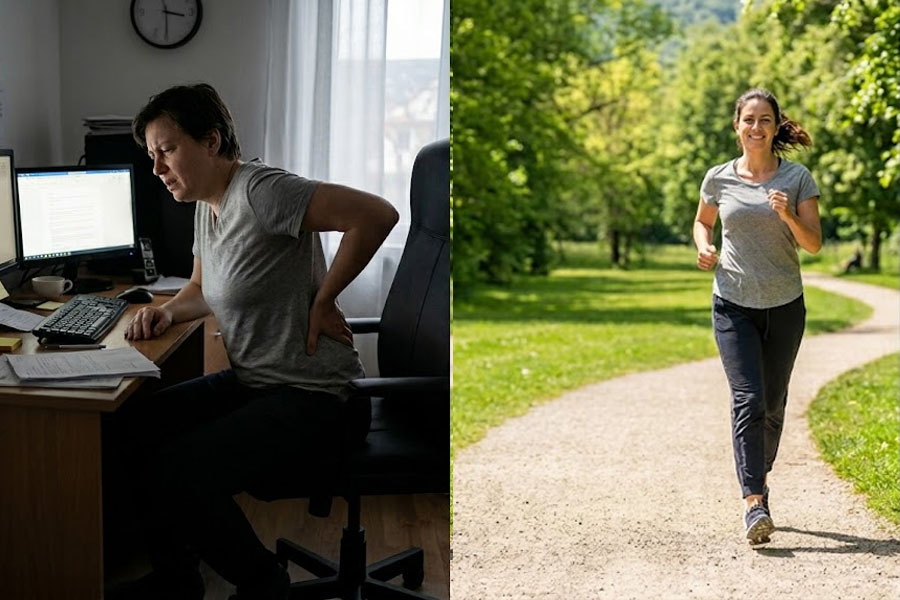
Walking: The Simple Antidote to the “Sitting Disease”
In modern-day America, the “sitting disease” has become a silent epidemic. With millions of Americans tethered to desks for eight to ten hours a day, the health risks — including heart disease, type 2 diabetes, and premature death — have never been more apparent. However, recent breakthroughs in sports medicine suggest a powerful, accessible remedy: walking.
The Science of Survival: Why 11 Minutes Matter
For years, health experts warned that prolonged sitting was nearly impossible to “undo.” But new research published in the British Journal of Sports Medicine offers a more optimistic outlook. Data from over 44,000 individuals showed that even 11 minutes of moderate-intensity exercise, such as brisk walking, can significantly lessen the ill effects of sitting for 10 hours a day. While 35 minutes remains the “magic number” for maximum benefit, the core message is clear: any movement is better than none.
The 10,000 Steps Goal: Myth or Medicine?
While the 10,000-step goal started as a marketing slogan, recent studies of 72,000 participants in the UK Biobank have grounded it in hard science. Walking between 9,000 and 10,000 steps a day can reduce the risk of cardiovascular disease by 21% and the risk of mortality by 39%, regardless of how much time you spend sitting. Surprisingly, you don’t need to hit the full 10k to see results; nearly 50% of these life-saving benefits begin at just 4,000 to 4,500 steps.
Slowing Down the Biological Clock
Walking doesn’t just help you live longer; it helps you stay younger. The pace at which you walk is a direct lever for biological aging. Research indicates that fast walkers have longer telomeres — the protective caps on our DNA. The difference in biological age between a slow and a fast walker can be as much as 16 years. Furthermore, walking improves vascular elasticity and fights inflammation better than many medications.
Practical Strategies for the WFH Era
For the millions of Americans working from home (WFH), hitting step goals can be a challenge. Real-world insights from active communities suggest several “hacks”:
- The “Fake Commute”: Use the time you used to spend driving to take a 20-minute walk before and after work to create a boundary between “home” and “office”.
- Micro-Breaks: Short, 3-minute bursts of brisk walking or 10 squats every 45 minutes are more effective for blood sugar control than one long walk at the end of the day.
- The Walking Pad: Many WFH professionals now use under-desk treadmills at slow speeds (1-1.5 mph) during meetings to clock miles without losing productivity.
Walking vs. Running: Which is Better?
For those concerned about joint health or weight loss, walking often beats running. Walking provides less impact on joints and keeps the heart rate in the “fat-burning zone” (60-70% of max), preventing the “anaerobic switch” where the body stops burning fat and starts using glycogen. For cardiovascular prevention, walking has even been shown to reduce heart disease risk by 9%, compared to 4.5% for running.
Conclusion
You don’t need a gym membership or expensive equipment to save your health. By simply increasing your daily step count and breaking up long periods of sitting, you can effectively combat the “sitting disease” and add years to your life.