

The Genetic Code of Eternity: How the 5,000-Year-Old Bristlecone Pine Revealed the Secrets of Biological Immortality
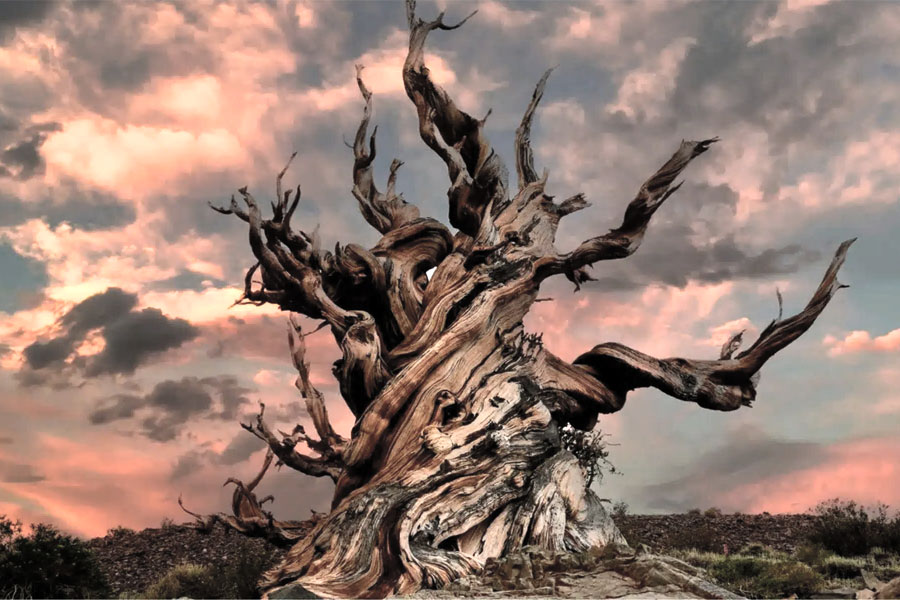
In the harsh environment of California’s White Mountains, at altitudes exceeding 3,000 meters, live beings whose age predates the Egyptian pyramids. Bristlecone pines (Pinus longaeva) are living monuments to time, with the oldest known specimen, “Methuselah,” being over 4,800 years old. Recent genome sequencing of these trees has sparked a sensation: scientists have discovered a unique “immortality code” that allows these plants not just to survive, but to bypass the process of biological aging (senescence). This discovery challenges traditional views on biology and opens incredible vistas for the medicine of the future.
Architects of Longevity: What is Hidden in the Bristlecone DNA?
Analysis of the oldest genome on the planet has shown that Bristlecone pines possess DNA protection mechanisms that are virtually absent in other species. While most organisms accumulate genetic errors as they age, these trees maintain the purity of their code over millennia.
- Enhanced Repair Mechanisms: The pine’s genome contains an extraordinary number of gene copies responsible for repairing DNA damage caused by UV light and radiation.
- Telomere Stability: Unlike animals, whose telomeres (protective chromosome caps) shorten with each cell division, those of Pinus longaeva maintain their length for centuries.
- Meristem Activity: Cells at the tree’s growth points remain “evergreen” in their youth, retaining the ability to divide and differentiate without signs of degradation.
- Chemical Defense: The wood is saturated with unique resins and terpenes that make it nearly impervious to fungi, insects, and rot.
Survival Strategy: Why Environmental Harshness Breeds Immortality
Paradoxically, it is the extreme conditions—thin soil, rarefied air, and freezing winds—that acted as the catalyst for longevity. In such an environment, pathogens and competitors cannot survive, and the tree itself grows extremely slowly, minimizing cell divisions and potential DNA errors.
- Slow metabolism allows the tree to “conserve” its resources for decades.
- Isolation prevents the spread of forest fires and epidemics common in dense forests.
- Specific ring structures allow parts of the tree to die off while other branches continue to thrive via a shared root system.
Comparative Analytics: What Humans Can Learn from the Pine
Comparing the biological processes of long-lived species allows scientists to identify key markers that could be used in future anti-aging therapies for humans.
| Characteristic | Human (Homo sapiens) | Bristlecone Pine (Pinus longaeva) | Significance for Science |
|---|---|---|---|
| Hayflick Limit | ~50 cell divisions | Virtually absent | Finding ways to bypass cellular senescence |
| Telomerase | Declines with age | Constantly active | Protecting chromosomes from degradation |
| Genome Size | ~3.2 billion base pairs | ~20-30 billion base pairs | Studying the role of “junk” DNA in protection |
| DNA Repair | Moderate | Ultra-high intensity | Preventing oncological diseases |
Impact on Modern Gerontology and Medicine
The discovery of the “immortality code” in ancient pines provides scientists with a roadmap for finding similar regulators in the human body. Researchers have already begun experiments to activate specific protective genes found in pines within human cell cultures. This could lead to the development of drugs that don’t just treat the diseases of old age but delay their onset for decades.
- Development of new skin protection methods against photo-aging based on pine phytonutrients.
- Utilizing pine DNA repair algorithms to correct genetic mutations in humans.
- Studying epigenetic markers that allow trees to adapt to climate change.
Ethical and Philosophical Aspects of the Discovery
As Chief Editor, I find it vital to ask: are we ready for the consequences of decoding this secret? The immortality of the Bristlecone pine is based on immobility and rigid adaptation. Transferring these mechanisms to a dynamic human being requires a profound understanding of the balance between regeneration and the risk of uncontrolled cell division (cancer). We stand on the threshold of an era where the mythical “Tree of Life” becomes a reality in genetic laboratories.
FAQ: Frequently Asked Questions about “Immortal” Pines
- Can these trees really live forever? Theoretically, yes. They show no signs of programmed aging. They usually die only from external factors like lightning or erosion.
- Where is the oldest tree located? “Methuselah” grows in the Inyo National Forest in California, but its exact location is kept secret to protect it.
- Can I plant a Bristlecone pine in my garden? You can, but it will grow extremely slowly, and its longevity mechanisms might function differently in comfortable conditions.
- What is the secret of their resin? The resin contains powerful antiseptics and antioxidants that prevent decay for decades even after parts of the tree die.
- Will this discovery help cure cancer? Studying how pine cells divide for thousands of years without mutations is critical for cancer prevention research.
- How do scientists determine the age without cutting the tree? They use increment borers to extract a pencil-thin core sample to count the rings.
- Is genome size related to longevity? It is suggested that the massive genome provides redundant systems that back each other up during DNA damage.
- Do animals eat these trees? The needles are very tough and bitter, which is part of their defense strategy.
- Does climate change affect ancient pines? Unfortunately, yes. Rising temperatures make them more vulnerable to bark beetles that couldn’t survive at these altitudes before.
- When will these findings be applied to humans? Clinical trials for specific components and technologies may take decades, but initial skin-care applications are already in development.