


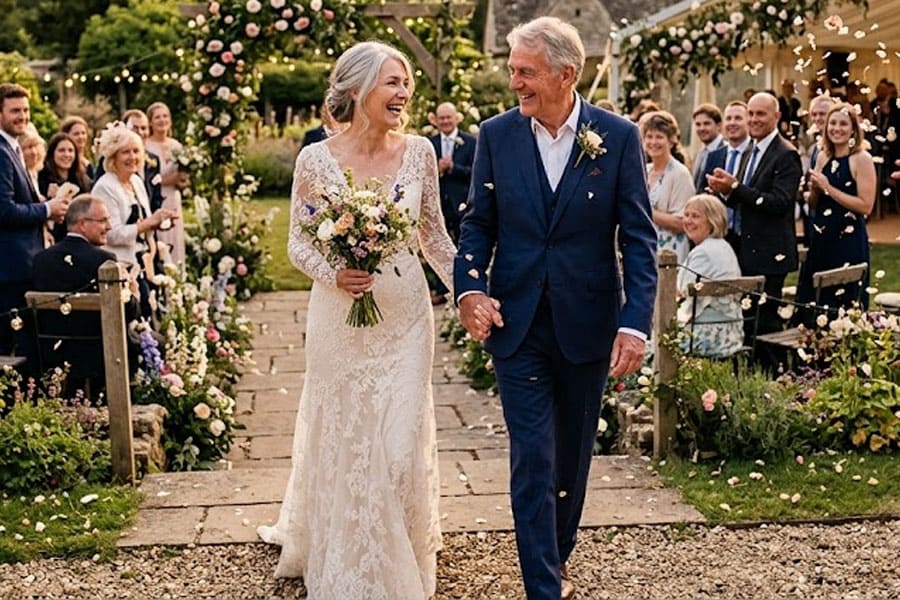
How to Start a New Life and Stay Healthy After 45
For many women, reaching the forty-five-year milestone is perceived as a finished chapter where the main events are already behind them. The accumulated baggage of professional experience, grown children, and established routines create a sense of stability that imperceptibly grows into psychological stagnation. However, modern medicine and psychology view this age not as the sunset, but as a time of “second prime,” when a woman possesses enough wisdom and resources for a complete reboot of her existence.
Changing one’s usual way of life in mature age is a powerful stimulus for brain neuroplasticity. When we step out of our comfort zone, swap a strict business suit for sneakers, and office silence for the sound of sea waves, our body launches adaptation processes that literally rejuvenate the system. Staying healthy after 45 requires not only physical activity but also a readiness for emotional changes that can radically improve the quality and duration of life.
The experience of those who dared to make a fundamental change shows that fears of the unknown often turn out to be groundless. It is important to understand that self-care during this period includes not just a healthy diet but also the search for personal happiness, which is a key factor in psychological resilience. The transition to active longevity begins with one decisive step that can turn an ordinary vacation into the start of a new, exciting story.
The Psychology of Change: Stepping Out of the Comfort Zone
For the majority of women who have worked in systemic structures for decades, life on a schedule becomes second nature. An official business style, a briefcase with documents, and constant busyness at work form a certain muscular armor and psychological tension. Abandoning this role requires great courage, especially when your inner circle is used to seeing you as “balanced and serious”. A change of scenery at age 45 helps shatter these stereotypes and restores the ability to be surprised by the world.
Registering on a dating site or a spontaneous trip to another country at this age is often perceived as something extraordinary. However, it is precisely such “shocking” actions for the habitual rhythm that allow for a shake-up of cognitive functions. Psychologists note that new social contacts and the need to communicate in a foreign language activate areas of the brain that may have been dormant for years. This is the best prevention for age-related cognitive decline.
- Benefits of stepping out of the habitual rhythm:
- Stimulation of cognitive functions through learning a new language.
- Reduction of chronic stress levels by changing activities.
- Increased self-esteem through overcoming fears.
- Formation of new neural connections during cultural adaptation.
Unique Fact: Spanish society practically knows no “age boundaries.” Women here lead an active social life, look for relationships, and travel even over the age of 90, as confirmed by the participation of 94-year-old citizens in dating television shows.
Practical Application: If you feel professional burnout, allow yourself a “window” for rest before looking for a new job. Sometimes a ten-day vacation can become a bridge to a completely different quality of life if you remain open to fate’s offers.
Analogy: The psyche of a woman after 45 is like a library with many valuable but dusty books. Changing your lifestyle is like a deep clean and opening the windows: the old knowledge remains, but fresh air and space for new volumes appear.
Real-life example: Snezhana from Grodno, a legal counsel with many years of experience, decided at 45 to experiment and registered on a dating site. One call and a short trip to Spain completely changed her life: heels were replaced by sneakers, and paperwork by runs along the sea.
Complex term explained: Neuroplasticity is the brain’s ability to change and restore connections under the influence of new experiences. This proves that we can learn and change at any age if we create the conditions for it.
The Mediterranean Lifestyle as a Key to Longevity
Moving to coastal regions, such as Valencia or Castellón, automatically changes the body’s physiological indicators. In Spain, physical activity is built into daily life: long walks around the city, visiting museums, and beaches become the norm. Here, sneakers are not just shoes but a symbol of freedom and health. Giving up stilettos in favor of comfortable footwear reduces the load on the spine and joints, which is critical after age 45.
The attitude toward food in Mediterranean culture also promotes health. Dividing preferences, where one partner loves meat and fish and the other loves vegetables and fruits, allows for creating a balanced diet without conflict. Cooking paella together or visiting local markets turns eating into a social ritual that lowers cortisol—the stress hormone.
- Elements of active longevity in Spain:
- Daily runs or long walks along the sea.
- Absence of a “wearing out old clothes” cult and attention to appearance at any age.
- Using bright accents in style (e.g., red lipstick), which boosts psychological tone.
- Openness to communication and new acquaintances after age 80.
Unique Fact: In Spain, women aged 85 continue to take meticulous care of themselves, attending weekly dinners with perfect manicures, hairstyles, and red lipstick, perceiving self-care as a natural part of life.
Practical Conclusion: To maintain health, it is not necessary to move to another country. You can adopt the “Spanish approach”: buy high-quality sneakers, start walking at least 5-7 kilometers a day, and stop saving joy for “later”.
Comparison: A woman’s life in an office is like running in a wheel—lots of effort, but the scenery doesn’t change. A Mediterranean lifestyle is a marathon along a picturesque coast, where not just the result but every breath of sea air matters.
Case Study: Juan, Snezhana’s husband, maintains surprising activity at 60. His secret lies in a smart attitude toward finances and a readiness to learn new things. He started working at 14, accumulated capital, but remained open to love and new cultures.
Complex term explained: Terroir (in the context of life) is the combination of climatic, geographical, and cultural factors that determine the state of health and world-view of a person in a specific locality.
Legal and Social Aspects of Living in Spain
When changing the country of residence in mature age, the issue of legal protection becomes critical. In Spain, there is a unique form of formalized relationship that is ideal for people who value stability and simplicity. This allows one to legalize their status and receive all the rights of spouses without the exhausting bureaucratic procedures characteristic of traditional marriage.
Financial independence or a partner’s support also plays a role in adaptation. The opportunity not to work at age 45 and devote time to language study and household chores is a luxury that helps avoid stress. In Spain, a man often takes on all expenses, taking pride in the intelligence and education of his companion, which for many Slavic women becomes a pleasant cultural discovery.
Table: Comparison of Union Forms and Lifestyle
|
Parameter
|
Traditional Marriage
|
Official Cohabitation (Pareja de hecho)
|
Office Lifestyle (before 45)
|
|---|---|---|---|
|
Termination Term
|
Minimum 1 year (in Spain)
|
Instant upon request
|
Not applicable
|
|
Rights (pension, housing)
|
Full
|
Full
|
None (dependent on job)
|
|
Physical Activity
|
Moderate
|
High (walking/running)
|
Low (sedentary)
|
|
Dress Code
|
Casual
|
Casual (sneakers)
|
Strict business
|
Unique Fact: In the form of “cohabitation” (Pareja de hecho) in Spain, all rights to inheritance and a partner’s pension are preserved, but there are no legal costs for parting, making this option economically advantageous.
Practical Application: When moving, it is important to integrate into local legislation immediately. Registration of residency and your relationship through civil registry offices with an interview is a guarantee of your safety in a foreign country.
Comparison: Official cohabitation in Spain is like a modern contract with an open date: you enjoy all the benefits of a partnership but are not burdened by chains that hinder breathing in case of a crisis.
Case: Over 8 years in Spain, Snezhana never returned to work as a lawyer, as validating her diploma at 45 required too much time. Instead, she focused on self-realization through domestic life, sports, and language study to a native level, which Juan fully supported.
Complex term explained: Pareja de hecho is the official registration of partner relationships in Spain, granting rights similar to marriage but with a simplified procedure for ending the union.
Mental Health and Combating Social Isolation
One of the main difficulties during a radical life change is nostalgia and a sense of loneliness. Even with a perfect relationship with a partner, the need for “one’s own” forest, air, and coffee with friends remains. To maintain mental health after 45, it is critical to stay connected with loved ones via video calls and openly discuss feelings with your partner.
Spaniards teach straightforwardness: speaking about desires without hints or games. In mature age, this saves a colossal amount of emotional energy. The ability to yield to each other and not force a partner to do something they don’t like (e.g., sunbathing when they want to sit under an umbrella) is the key to a couple’s longevity and mental peace.
- Ways to maintain psychological balance:
- Regular communication with relatives via video call to alleviate isolation.
- Honest dialogue with a partner about fears and nostalgia.
- Searching for compromises in daily life without trying to change the other person.
- Awareness of one’s uniqueness in a new culture (the position of the “outsider” as an observer).
Unique Fact: Spaniards do not make a tragedy out of death and live with pleasure until the last day, which helps them avoid depression associated with the fear of aging.
Practical Conclusion: If you are overwhelmed by total loneliness in a new setting, you just need to give yourself time to calm down. Anxiety recedes when you realize you can always return but choose to stay for the sake of safety and care.
Comparison: Social adaptation in mature age is like transplanting a mature tree. It needs supports (connection to the homeland) and abundant watering (husband’s support) to take root in new soil.
Real-life example: Snezhana admits she sometimes feels like an “outsider” in Spain, but Juan’s support, which shields her from difficulties, helps her cope with these periods. They have adjusted to each other, learning not to waste time on “games” in the relationship.
Complex term explained: Social integration is the process of an individual’s inclusion into a new cultural environment, in which they accept its norms while preserving their own identity.
Conclusions
- A change in lifestyle after 45 promotes brain neuroplasticity and is the best prevention for age-related diseases.
- Active longevity is based on comfortable footwear, regular physical activity in the fresh air, and abandoning strict social boundaries.
- Official registration of partner relationships in Europe provides a woman with legal and financial protection similar to traditional marriage.
- Straightforwardness in communication and the ability to find compromises are key skills for maintaining mental health in mature relationships.
- The Spanish model of attitude toward age (“living with pleasure until the last day”) helps overcome the fear of aging and realize oneself at any age.
FAQ
1. Is it too late to change one’s life at 45-50? Science proves that at this age, the brain has enough flexibility to learn languages and adapt to a new culture. Many women start their “second prime” during this period, shedding years of accumulated stress.
2. How do you decide to move to someone you barely know? It is important to listen to your sense of safety and calm. If you feel protected and cared for next to a man, this can be a decisive factor, even if you’ve known each other a short time.
3. Is it hard to learn a foreign language in mature age? Learning a language at 45 takes more time than in youth, but it is excellent training for the memory. Full integration is possible if you communicate with a native speaker at home and watch local television.
4. What is “Pareja de hecho” and why is it beneficial for a woman? It is official cohabitation that grants rights to housing and a partner’s pension. It is beneficial because it is formalised faster than marriage and doesn’t require a long and expensive divorce in case of parting.
5. How do you handle nostalgia for your homeland? Regular video calls with loved ones and honest conversations with your partner help. It is important to allow yourself to be sad but remember the benefits and safety you gained in the new place.
6. Is it mandatory to work in Spain after moving? It all depends on the couple’s agreement. If the partner earns enough, a woman can focus on language study, sports, and managing the home, which is perceived as perfectly normal in Spain.
7. How do Spaniards view age? In Spain, age boundaries are practically erased. People look for love at 80, go on cruises at 90, and always take care of their appearance, using bright accents and makeup.
8. What kind of shoes are best to wear for longevity? Switching from stilettos to high-quality sneakers is an investment in spinal health. Active walks and runs are only possible in comfortable shoes, which are appropriate almost everywhere in Mediterranean culture.
9. How do gastronomic habits affect relationships? Respecting a partner’s tastes (for example, when one eats meat and the other rice) helps avoid domestic conflict. Shared meals are an important part of social integration and health.
10. Can you find happiness through a dating site? Yes, the experience of many women confirms that even “registering for the sake of it” can lead to meeting a reliable partner. The main thing is to be open to communication and not afraid to take actions that surprise others