


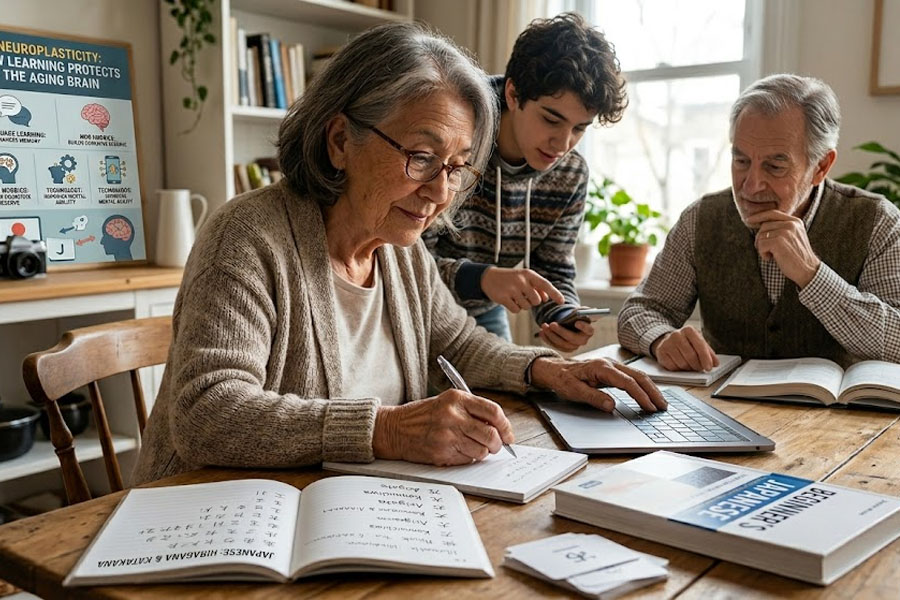
Neuroplasticity: How Learning Protects the Aging Brain
For decades, the scientific community believed that the human brain was “fixed” after childhood. However, contemporary neuroscience has debunked this myth, revealing that the brain possesses neuroplasticity—a lifelong capacity to reorganize its structure, functions, and connections in response to new experiences. This adaptability is the key to maintaining a “young” brain and building a cognitive reserve that shields us from the biological vulnerabilities of aging.
The Biological Reality of the Aging Brain
Aging typically entails physiological changes, including a reduction in hippocampal volume, slower synaptic transmission, and loss of white matter integrity. These changes can lead to a decline in memory and executive function. However, aging is not synonymous with irreversible deterioration. Through self-directed neuroplasticity, individuals can consciously reshape their brain activity through cognitive engagement and purposeful activity.
The Power of Multilingualism and New Hobbies
One of the most effective ways to preserve brain health is learning. Recent studies involving over 86,000 adults show that multilingualism is directly linked to a slower rate of cognitive decline. When a person uses multiple languages, the brain must constantly switch and suppress competing information, which trains systems of attention and cognitive control. This mental “workout” results in a physically larger hippocampus and greater resilience against neurodegenerative diseases.
Beyond languages, specific hobbies act as powerful catalysts for neural growth:
- Music: Playing an instrument strengthens the corpus callosum, which connects the brain’s hemispheres, improving problem-solving skills and memory regardless of age.
- Reading: Engaging with complex literature or news reduces stress and develops crystallized, fluid, and emotional intelligence.
- Intellectual Games: Puzzles, Sudoku, and strategy games like Go or Chess increase synaptic plasticity and can even help prevent symptoms of depression and anxiety.
Physical Activity and the BDNF Protein
The brain does not exist in isolation from the body. Regular physical exercise is crucial because it stimulates the production of BDNF (Brain-Derived Neurotrophic Factor). This protein supports the development of new neurons and strengthens existing connections, particularly in the hippocampus, which is vital for memory. Conversely, prolonged sedentary behavior may have a detrimental effect on cognitive efficiency.
Building a Cognitive Reserve
The concept of cognitive reserve explains why some individuals with significant brain pathology do not show clinical symptoms of dementia. This reserve is built through a lifetime of education, complex occupations, and social interaction. Even in late life, adopting new technologies or creative manual skills can stimulate synaptogenesis (the building of new connections) and neurogenesis (the birth of new neurons).
In conclusion, aging well is an active process. By embracing the “use it or lose it” principle, we can harness our brain’s natural plasticity to flourish, turning the later chapters of life into a period of continued transformation and growth