

Physical Fitness: Burning Calories in the Garden
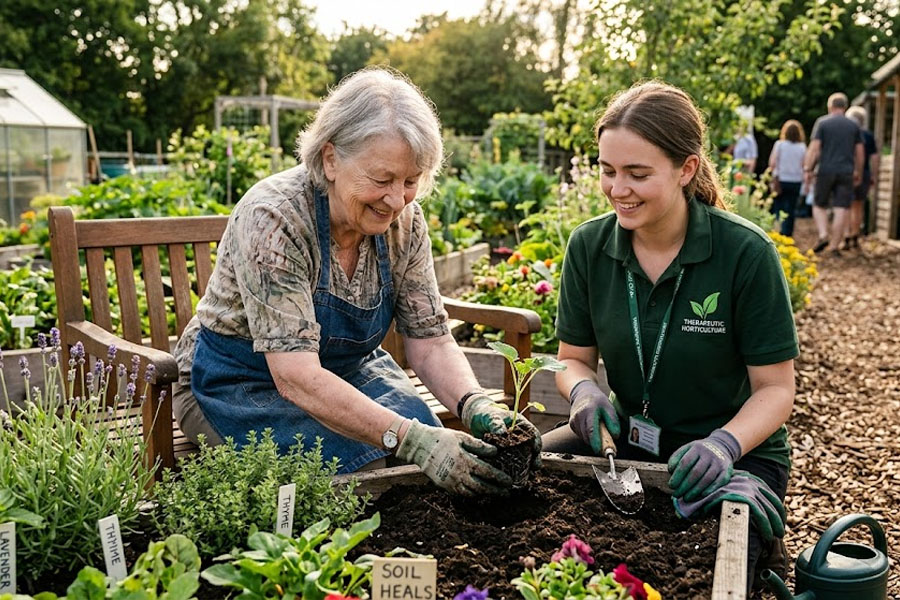
Horticultural therapy, also known as garden therapy, is the practice of using gardening activities to promote human healing and rehabilitation. This practice has deep historical roots, dating back to 2000 BC in Mesopotamia and 500 BC in Persia, where “paradise gardens” were designed to provide sensory comfort. In modern history, Dr. Benjamin Rush, the “Father of American Psychiatry,” first documented the positive effects of gardening on mental illness in the 19th century. Today, it is a structured clinical practice used to treat conditions ranging from PTSD and depression to physical disabilities.
Physical Benefits and Fitness Gardening is a unique form of physical activity that combines strength, endurance, balance, and stretching. Active gardening for 30–45 minutes is considered a moderate level of physical activity, while three hours of varied garden work can be equivalent to an hour of intensive gym training. Specific tasks have high caloric costs: deep digging can burn up to 344 kcal per 30 minutes, while weeding large weeds burns about 180 kcal.
Cognitive Longevity and Dementia Prevention
Beyond calorie burning, gardening has specific health impacts:
- Bone Density: A study found that women over 50 who gardened at least once a week had higher bone density than those who engaged in jogging or swimming.
- Immune System: Contact with soil introduces humans to beneficial microorganisms. Specifically, the bacterium Mycobacterium vaccae found in soil can stimulate serotonin production in the brain, acting as a natural antidepressant.
- Gut Health: Research suggests that soil acts as a primary “inoculator” for the human gut microbiome. Modern urban lifestyles have led to a loss of microbial diversity in the gut (only about 10% of the diversity found in soil), which is linked to an increase in lifestyle diseases.
Cognitive Longevity and Mental Well-being Scientific data confirms that gardening reduces cortisol levels (the stress hormone) more effectively than reading. It provides “soft fascination,” allowing the brain to recover from the “directed attention fatigue” of urban life.
For the elderly, gardening is a powerful tool against cognitive decline:
- Dementia Prevention: Daily gardening can reduce the risk of dementia by 36%.
- Brain Chemistry: Gardening increases levels of BDNF (brain-derived neurotrophic factor) and VEGF, proteins essential for the growth and survival of neurons.
- Intelligence: A study by the University of Edinburgh showed that individuals who gardened throughout their lives demonstrated higher cognitive improvement from age 11 to 79 compared to those who did not.
The Sensory Garden Experience To maximize therapeutic effects, “sensory gardens” are designed to engage all five senses. Tactile zones may include “sensory paths” for walking barefoot to improve circulation and prevent flat feet. Aroma zones utilize plants like lavender and pine to trigger memory and relaxation. Visual zones use color theory—warm reds and yellows to energize, and cool blues to calm the mind.
In conclusion, gardening is not just a hobby; it is a “dialogue with life” that restores our evolutionary connection to nature. Whether through a balcony pot or a community plot, the act of nurturing a plant is an act of caring for oneself.