


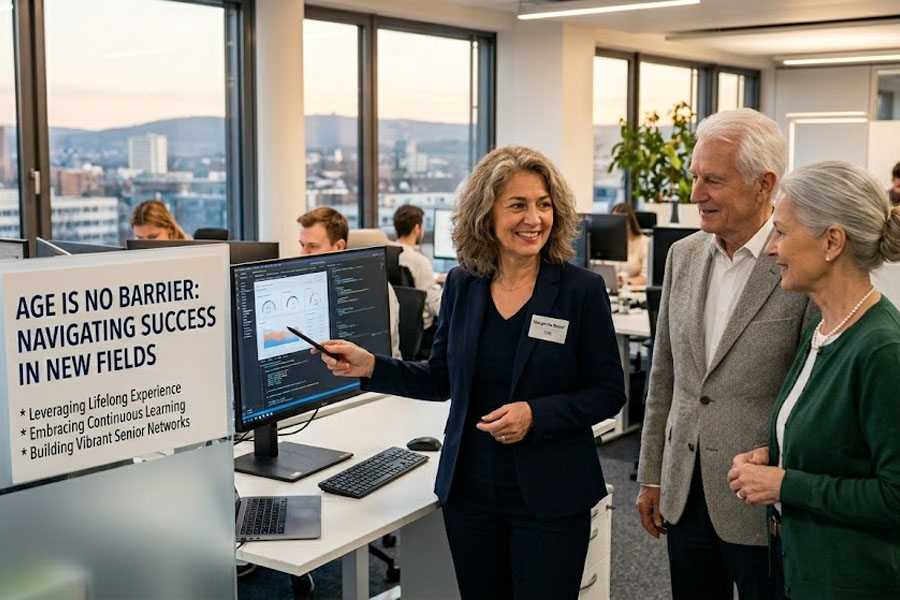
Career Growth and Professional Reinvention After 50: Your Experience is Your Superpower
The narrative that professional growth stops at fifty is rapidly becoming a myth. In today’s evolving job market, maturity is not a barrier; it is a strategic foundation. Research shows that 82% of employers recognize the immense value of older employees for their reliability, wisdom, and seasoned approach to problem-solving. If you are considering a pivot, you are not alone—and the odds are in your favor.
The “Silver” Competitive Advantage
Mature specialists bring assets that AI and entry-level workers often lack: emotional intelligence, a broad network of contacts, and “crystallized intelligence”—the ability to use accumulated knowledge, which continues to grow well into one’s 60s and 70s. Statistics indicate that employees over 50 are 30% less likely to change jobs frequently compared to younger generations, significantly reducing recruitment costs for companies. They also tend to demonstrate higher productivity in roles requiring meticulous attention and responsibility.
High-Demand Sectors for Professional Reinvention
If you are looking to start a new chapter, several industries actively seek the stability that maturity provides:
- IT and QA Testing: Many believe IT is only for the young, but Quality Assurance (QA) testing is a highly accessible entry point. Intensive programs (like those from Yandex Practicum or other bootcamps) can prepare you in as little as 4-5 months, even without a prior technical background.
- Consulting and Mentorship: Your decades of experience can be monetized by advising others. Industries like finance, industrial engineering, and administration value the depth of understanding that only years of practice can provide.
- Social Care and Healthcare: The demand for professional caregivers and “care assistants” is skyrocketing due to demographic shifts. This role requires empathy and life experience—qualities that come naturally with age.
- The Creative Economy: From becoming a certified tour guide to professional modeling—exemplified by 66-year-old Ludmila Lysenko, who started her career at 60 and now works with top fashion brands.
The “Age-Proof” Strategy: Tactics for Success
To succeed, you must present yourself as a modern, high-energy candidate.
- The Modern Resume: Stop using chronological resumes that go back 30 years. Instead, focus on a functional format that highlights skills and results. Focus primarily on the last 15 years of experience. Use a “Summary” section to show—not just tell—your achievements with specific numbers and facts.
- Digital Literacy: Staying relevant means mastering modern tools. Whether it’s AI-assistants, cloud services, or industry-specific software, continuous learning is essential.
- Networking and Volunteering: Sometimes the best way to pivot is through the “side door.” Volunteering can act as a powerful career bridge, helping you learn new skills, expand your network, and prove your dedication to a new field.
Entrepreneurship: The Late-Start Advantage
If traditional employment doesn’t appeal, consider starting your own venture. Entrepreneurs who start businesses after 50 are 20% more likely to succeed than their younger counterparts. This success is attributed to more realistic risk assessments, deeper market knowledge, and established professional networks.
Conclusion: Professional reinvention after 50 is not just about finding “any job”; it’s about finding a role that fills your life with meaning while providing financial stability. By transforming your past experience from “baggage” into a “launchpad,” you can ensure your most productive years are still ahead of you.