

The Art of the Great Deceleration: Reimagining Luxury Travel in 2026
In an era defined by relentless “hustle culture” and digital fatigue, a profound shift is occurring in how we explore the world. For the American traveler in 2026, the traditional “vacation” is being replaced by the “Slow Travel” movement. This philosophy, born from the broader Slow Life movement, prioritizes depth over distance and quality over a checklist of sights.
The Philosophy: Beyond the Checklist
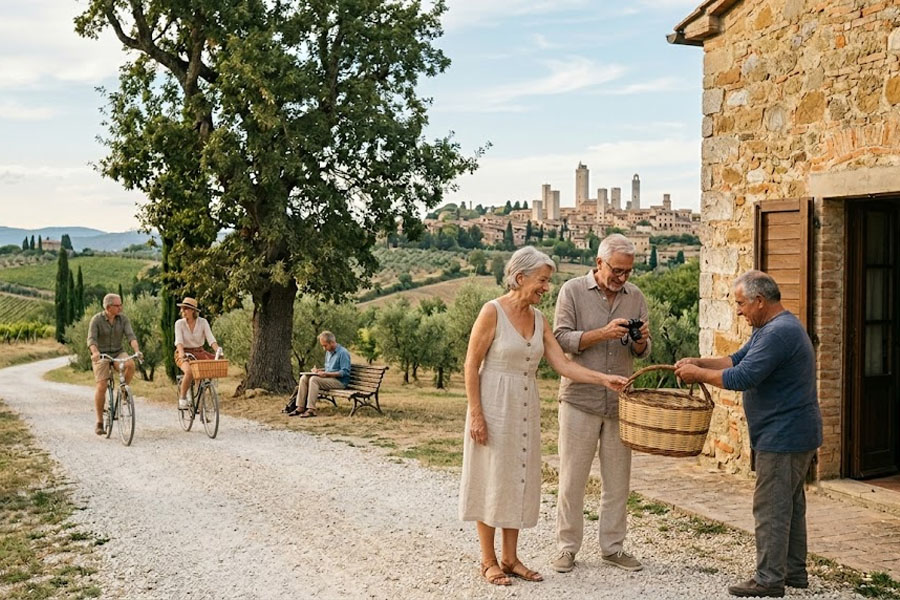
The roots of this shift trace back to the 1986 Slow Food movement in Italy, which rose as a protest against fast-food culture. Today, this has evolved into a travel ethic where the goal is not to “see everything” but to truly feel a place. Instead of spending three weeks racing through ten European capitals, 2026’s travelers are choosing to stay in one region, like the wild landscapes of Sardinia or the serene canals of Utrecht, to immerse themselves in local rhythms.
Psychologically, this “slow pace” is a necessity. Our brains are not designed for constant tension; slowing down reduces cortisol and allows us to perceive the sensory details that make a journey memorable.
Top Destinations for the 2026 Slow Traveler
According to the latest Best in Travel rankings, several destinations are perfectly aligned with the slow living ethos:
- Finland: Known as the land of a thousand lakes, it offers unique design in Helsinki and soul-stirring activities like dog sledding under the Northern Lights in the north.
- Sardinia, Italy: A haven for nature lovers, famous for its ancient Nuraghi structures and a linguistic tapestry ranging from Sardinian to Catalan.
- Cádiz, Spain: Ideal for those seeking cultural depth, featuring a legendary ten-day carnival and world-class sherry and tapas.
- Nicosia, Cyprus: Recently named a top cultural destination, this city offers a unique blend of Greek, Turkish, and Venetian heritage.
The Luxury Glamping Revolution
The term “Glamping” (glamorous camping) has matured into a multi-billion dollar industry by 2026. It offers the perfect synthesis of ecological immersion and five-star comfort. Modern glamping sites now feature geodesic domes for stargazing, A-frame cabins, and luxury tents equipped with Wi-Fi, heated floors, and even private jacuzzis.
For Americans, glamping is the ultimate “reset button.” Sites like those in the Crimean Peninsula (e.g., Sloan v Udave or Ananda Glamping) exemplify this trend, offering panoramic sea views, yoga retreats, and farm-to-table vegetarian cuisine.
The Digital Nomad Lifestyle: Work from Anywhere
The boundaries between living, working, and traveling continue to blur. In 2025-2026, specific cities have emerged as “hubs” for the American digital nomad:
- Bali (Ubud & Canggu): Offers world-class co-working spaces and a specialized five-year Digital Nomad Visa.
- Lisbon, Portugal: Favored for its stable 5G and a “Digital” visa for those earning at least €2,800 monthly.
- Tbilisi, Georgia: Known for its liberal immigration policies, allowing Americans to stay for a year without a visa.
Conclusion
As we move through 2026, luxury is no longer defined by how much we spend, but by how much time we own. Whether it’s a month in a Utrecht cellar cafe or a week in a high-tech yurt, the new gold standard of travel is the ability to breathe, observe, and connect.