


Aussie Breakthrough: The Plastic That “Eats” Viruses – A New Shield for American Public Health
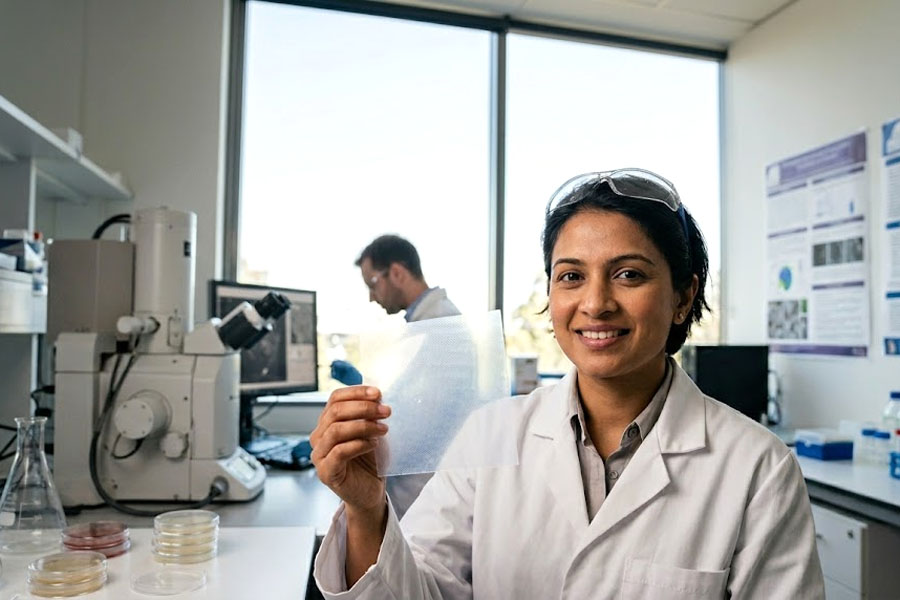
In an era where surface-borne pathogens pose a constant threat to public safety, a revolutionary discovery from Melbourne, Australia, is set to transform how we think about disinfection. Researchers at RMIT University have engineered a thin, flexible plastic film that does the unthinkable: it physically destroys viruses the moment they land, effectively “eating” them through pure geometry rather than toxic chemicals.
The Secret of the Dragonfly Wing
This breakthrough isn’t the result of a new chemical compound, but rather a masterclass in biomimicry. The science was inspired by the natural world, specifically the wings of cicadas and dragonflies, which possess a unique nanotexture that naturally repels and kills bacteria. The Australian team replicated this effect by covering an acrylic surface with thousands of microscopic “nanopillars”. These pillars are so tiny that they interact with viruses on a structural level, grabbing and stretching their outer shells until they literally rupture.
Unmatched Performance Against Silent Killers
The film was put to the test against the human parainfluenza virus 3 (hPIV-3), a primary cause of bronchiolitis and pneumonia that costs the United States approximately $250 million annually in healthcare expenses. The results were staggering: 94% of the virus particles were ripped apart or fatally damaged within just one hour of contact. Unlike traditional disinfectants like bleach, which degrade quickly under light and heat, this mechanical “virus-tearer” remains effective as long as the surface remains intact.
Why Geometry Beats Chemistry
For the U.S. healthcare system and consumer market, the benefits of a mechanical kill are immense:
- Non-Toxic: There are no chemical coatings to wear off, leach into the environment, or cause skin irritation.
- Anti-Resistance: Because the kill is physical, viruses cannot develop “antiviral resistance” in the way they might against chemical agents.
- Scalability: Lead researcher Samson Mah noted that the film uses low-cost materials and can be produced using existing roll-to-roll manufacturing equipment—the same process used to make common cling wrap.
From Hospital Beds to Smartphones
The potential applications for the American audience are nearly limitless. Distinguished Professor Elena Ivanova and her team envision this film covering hospital tables, keyboards, and even smartphone screens. As the world seeks more sustainable ways to manage public health, this Australian “virus-ripping” plastic offers a permanent, non-toxic solution that could soon become a standard feature in U.S. schools, clinics, and homes.