


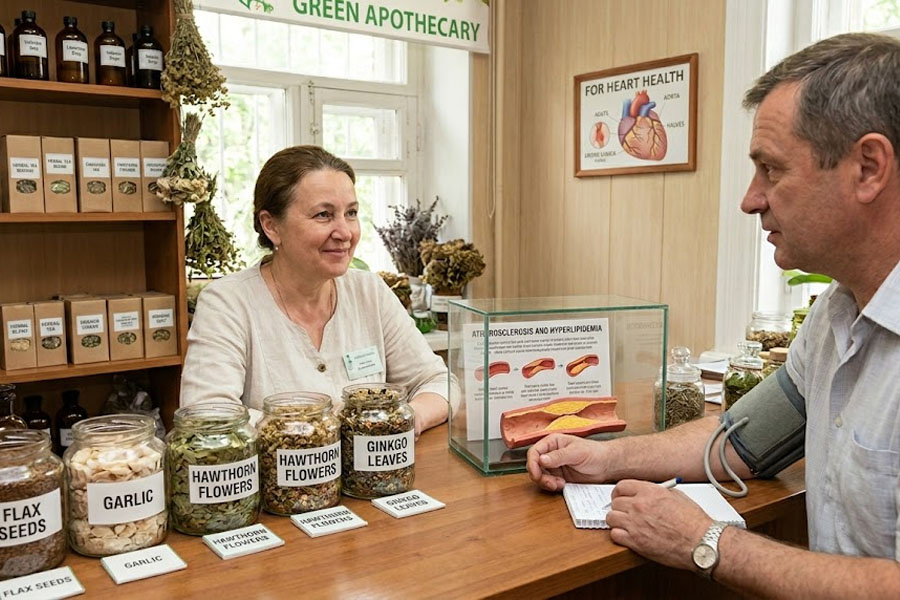
Nature’s Green Shield Against Cholesterol: Which Herbs Can Effectively Clear Your Arteries?
In an era dominated by processed foods and sedentary lifestyles, managing cholesterol levels has become a paramount global health challenge. However, nature provides a potent toolkit to combat this “silent threat.” Modern scientific inquiries confirm that specific leafy greens are more than just side dishes; they act as active biological agents capable of significantly lowering Low-Density Lipoprotein (LDL) levels and fortifying vascular integrity.
The Biology of Cholesterol: Why Diet Often Outperforms Drugs Early On
Cholesterol is an essential lipid-like substance required for cellular membrane construction and hormone synthesis. Problems arise when the delicate balance between “good” (HDL) and “bad” (LDL) cholesterol is disrupted. Excess LDL deposits onto arterial walls, initiating the formation of atherosclerotic plaques.
- LDL (Bad Cholesterol): Transports fats to tissues, increasing the risk of strokes and heart attacks.
- HDL (Good Cholesterol): Scavenges excess cholesterol and returns it to the liver for processing.
- Triglycerides: Fats used for energy storage; in excess, they increase blood viscosity.
- Endothelium: The inner lining of blood vessels, which is the first to suffer from oxidative stress.
Top 5 Greens for Vascular Cleansing
Not all greens provide the same lipid-lowering benefits. Scientists have identified a elite group of plants with unique chemical profiles capable of binding bile acids and flushing excess fats from the system.
1. Spinach: The King of Lutein and Fiber
- Contains record levels of lutein, which prevents cholesterol from accumulating on vascular walls.
- Rich in insoluble fiber, acting as a “broom” for the digestive tract.
- A natural source of nitrates that dilate blood vessels and assist in blood pressure regulation.
2. Kale: The Bile Acid Binding Specialist
- Demonstrates a unique ability to bind bile acids in the gut, forcing the liver to use stored cholesterol to replace them.
- Packed with quercetin and kaempferol—powerful antioxidants that protect cardiac tissue.
- Steaming kale significantly enhances its lipid-lowering potential.
3. Parsley: A Natural Diuretic and Detoxifier
- High Vitamin C content helps maintain the collagen structure of arteries.
- Contains apigenin, which exhibits anti-inflammatory effects on the endothelium.
- Promotes the excretion of excess fluids, reducing the workload on the heart.
Nutrient Comparison: Effectiveness Table
To understand which greens offer the most strategic benefits for your heart today, let’s examine their key characteristics.
| Type of Green | Key Nutrient | Mechanism of Action | Vascular Benefit |
|---|---|---|---|
| Spinach | Lutein | Endothelial antioxidant protection | Plaque prevention |
| Kale | Fiber + Potassium | Bile acid sequestration | Total cholesterol reduction |
| Arugula | Glucosinolates | Improved nitric oxide flow | Pressure reduction |
| Cilantro | Linalool | Lipid metabolism acceleration | Triglyceride lowering |
| Leaf Lettuce | Vitamin K | Clotting regulation | Calcification prevention |
Mechanisms of Action: How It Works on a Molecular Level
The efficacy of greens is driven by three fundamental factors working in synergy:
- Soluble and Insoluble Fiber: It literally traps cholesterol molecules within the gastrointestinal tract, preventing their absorption into the bloodstream.
- Phytosterols: These are plant-based cholesterol analogues that compete for absorption sites, thereby lowering circulating blood levels.
- Antioxidants (Carotenoids, Flavonoids): They shield “bad” cholesterol from oxidation. Oxidized cholesterol is what transforms into dangerous plaques; without oxidation, the risk is minimized.
Optimal Consumption: How to Get the Most Out of Your Greens
Simply eating a handful of herbs isn’t enough. Specific culinary techniques and pairings help maximize nutrient bioavailability.
- Always Include Fats: Vitamins A, E, K, and carotenoids are fat-soluble. Dress your salads with olive oil or add avocado to ensure absorption.
- Minimize Heat Exposure: Excessive boiling or stewing destroys Vitamin C and folate. Raw or lightly steamed is the way to go.
- Ensure Diversity: Don’t stick to just one type. Mix bitter greens (arugula) with neutral ones (spinach) for a full spectrum of nutrients.
FAQ: Frequently Asked Questions about Greens and Cholesterol
- Which green is the most effective for heart health? Spinach and Kale are the top choices due to their high fiber and lutein content.
- Can I replace fresh greens with “green powders”? Fresh is always better due to enzymes and hydration, but powders are a decent supplement for convenience.
- How much should I eat daily? Nutritionists recommend at least 2-3 cups of leafy greens per day.
- Will greens help if I still eat a lot of fatty meat? They can partially offset the damage, but long-term results require a balanced dietary approach.
- Are there any contraindications? People on blood thinners like Warfarin must monitor their intake due to Vitamin K’s role in clotting.
- Does freezing destroy the benefits? Freezing preserves most antioxidants, making it a great option for the off-season.
- Does cilantro really detox heavy metals? Some studies suggest cilantro has chelating properties, which indirectly supports cardiovascular health.
- What is the best way to cook kale? Steaming for 3-5 minutes makes its nutrients more bioavailable than eating it raw and tough.
- Do greens lower blood sugar? Yes, their high fiber content slows down carbohydrate absorption, which is beneficial for metabolic health.
- Are green smoothies effective? They are an excellent way to consume large quantities of greens at once, especially when mixed with lemon and ginger.