
The Lost World of the Caucasus: Archaeologists Discover Traces of an Unknown Civilization in the Georgian Highlands
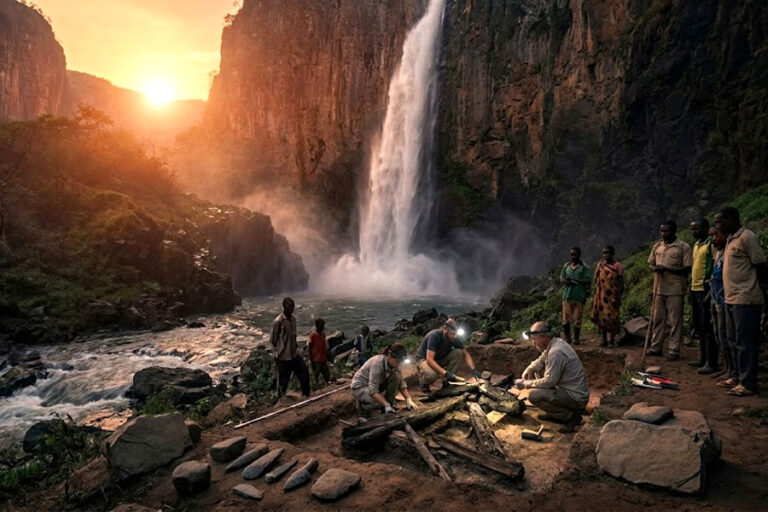
The Caucasus Mountains have kept secrets for centuries that modern scientists are only beginning to unravel. A new discovery in the high-altitude regions of Georgia has become a true sensation in the world of archaeology. A group of researchers has uncovered the remains of ancient settlements and megalithic structures at altitudes previously considered unsuitable for permanent habitation in antiquity. This discovery forces a complete rethink of the history of migration and the technological development of early societies [1, 2].
High-Altitude Mysteries: What the Georgian Mountains Hid for Millennia
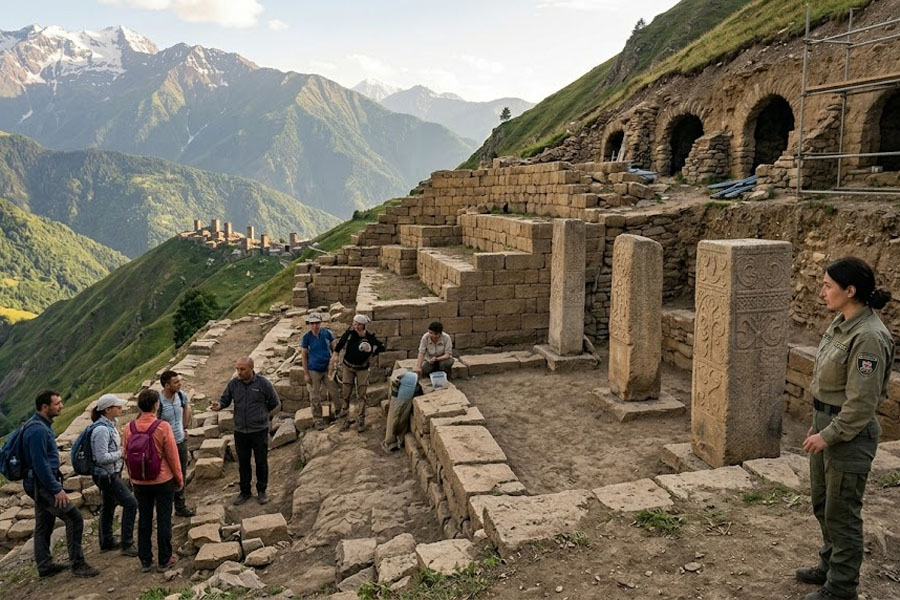
Working in extreme high-altitude conditions, an international team of archaeologists stumbled upon the foundations of complex stone buildings. These structures, located at an altitude of over 3,000 meters above sea level, point to the existence of an organized society with sophisticated architectural logic. During the expedition, the following key elements were identified:
- Cyclopean Masonry: Walls constructed from massive stone blocks without the use of binding mortar.
- Everyday Artifacts: Pottery fragments with unique patterns never before seen in lowland settlements.
- Obsidian Tools: Evidence that the highland inhabitants had access to trade routes or their own deposits of volcanic glass.
- Traces of Terraced Agriculture: Attempts by ancient people to adapt the harsh mountain landscape for food production.
Chronology and Scale: Analyzing the Cultural Layer
Preliminary analysis of the finds dates them to the Late Bronze Age or Early Iron Age. However, the depth of the cultural layer in some areas hints at even more ancient roots. Rigorous fact-checking and the use of radiocarbon dating methods confirm that these settlements were inhabited for several centuries [3].
| Parameter | High-Altitude Settlements | Lowland Cultures (Colchis/Iberia) |
|---|---|---|
| Altitude above sea level | 2500 – 3200 meters | 200 – 800 meters |
| Architectural Type | Megalithic dry-stone walls | Wooden and wattle-and-daub structures |
| Primary Occupation | Transhumance, resource extraction | Agriculture, winemaking |
| Isolation Level | High (seasonal accessibility) | Low (trade hubs) |
Who Were These “Mountain Architects”?
One of the main mysteries remains the question of the ethnic identity of the builders of these structures. Were they part of known cultures, such as the Trialeti or Kura-Araxes, or are we dealing with a completely new, isolated branch of humanity? As Chief Editor, I emphasize that such discoveries shift our understanding of the “oikumene”—the inhabited space of antiquity [1].
- DNA research from found organic remains (if any are recovered).
- Studying logistics: how were massive blocks transported to such heights?
- Comparing petroglyphs with other regions of the Caucasus and the Near East.
Survival Technologies in Extreme Conditions
Living at such an altitude required not only physical endurance but also deep knowledge in engineering and meteorology. Scientists suggest that these structures could have served not only as housing but also as observation posts or sanctuaries. Particular attention is paid to the following aspects:
- Water Drainage Systems: Channels carved into stone to prevent flooding during glacial melting.
- Thermal Insulation: Unusual wall thickness (up to 2 meters) that protected against piercing mountain winds.
- Astronomical Orientation: Probable alignment of buildings with solstice points.
Impact on Modern Science
This discovery places Georgia at the center of global archaeological discussions. It proves that mountains were not a barrier to the development of civilization; on the contrary, they served as a cradle for unique forms of social organization. We continue to monitor the excavations, which promise many more sensations [2, 4].
FAQ: Frequently Asked Questions about the Discovery in Georgia
- Is it true that a “forgotten” civilization has been found? Yes, the structures and artifacts indicate a society whose high-altitude lifestyle was previously undocumented by historians.
- What is the exact age of the finds? According to preliminary data, the finds are about 3,000–3,500 years old, corresponding to the Late Bronze Age.
- How high are these ruins located? Research is being conducted at altitudes exceeding 3,000 meters, where atmospheric pressure and climate are extremely harsh.
- Did these people use metal? Yes, traces of metalworking have been found, confirming their high technological level.
- Is this discovery related to the search for the Golden Fleece? There is no direct link, but the finds expand the context of ancient myths about “golden” Georgia.
- Who is conducting the excavations? A joint expedition of Georgian scientists and specialists from leading European universities (including the University of Innsbruck).
- Can tourists visit the site? At present, access is limited due to the complexity of the route and ongoing scientific work.
- What is the historical significance of this? It proves that ancient humans inhabited the highlands much earlier and more successfully than we previously assumed.
- Will the results be published in Nature or Science? Researchers are preparing a series of publications for peer-reviewed scientific journals.
- Is there a connection to the Dmanisi finds? Dmanisi belongs to a much older period (1.8 million years ago), while this find concerns the era of rising civilizations.