


Dinosaur Eggs in France: Stunning Scientific Discovery
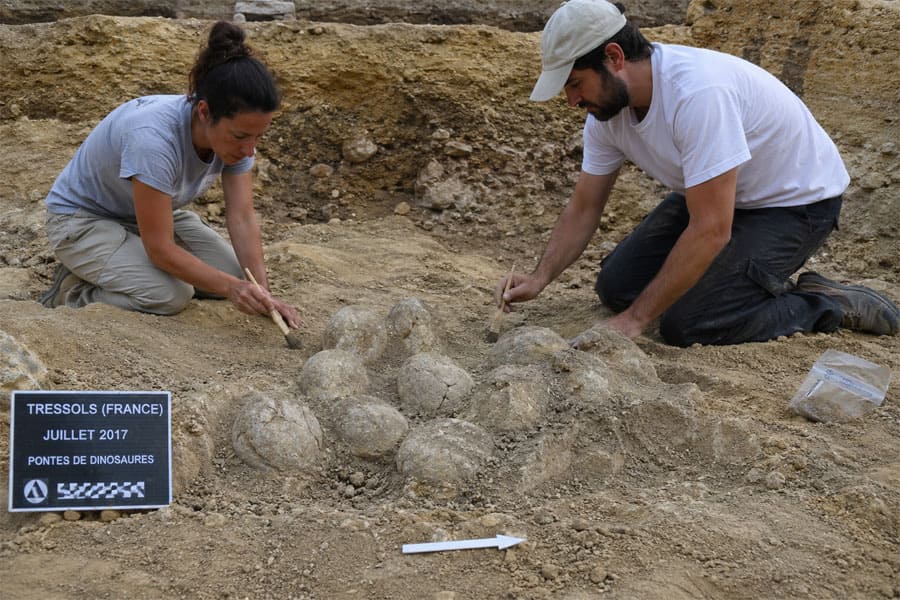
A monumental archaeological find in southwestern France is reshaping our understanding of the final millions of years of the age of giants. In the Mèze Park region, researchers have uncovered a unique cluster of over 100 dinosaur eggs, estimated to be 72 million years old. This discovery provides a rare window into the prehistoric past, offering clues about how these ancient reptiles lived and why they ultimately vanished.
Secrets of the Ancient Mèze Nesting Site
While preliminary research in the area began as early as October 2025, the true scale of the find has only recently been fully realized by the global scientific community. Paleontologist and geologist Alain Cabot, the founder of the Musée-Parc de Mèze, along with his daughter Marina, identified this “archive” of prehistoric life within Cretaceous period sediment layers.
- Magnitude of the Find: Over 100 eggs were discovered concentrated in a specific geological zone.
- Preservation Status: Approximately 5% of the eggs remain completely intact, while the majority had already hatched millions of years ago.
- Underground Potential: Scientists believe many more treasures remain hidden beneath the surface, requiring decades of further investigation.
Technical Specifications and Discovery Timeline
To organize the vast amount of data from this site, researchers are employing advanced geochronology and sedimentation analysis. The key parameters of the discovery are outlined in the table below.
|
Parameter
|
Description and Value
|
|---|---|
|
Location
|
Southwest France, Mèze Region
|
|
Geological Period
|
Late Cretaceous
|
|
Age of Findings
|
Approximately 72 million years
|
|
Quantity
|
Over 100 eggs (5% intact)
|
|
Discoverers
|
Alain Cabot and Marina Cabot
|
|
Research Start
|
October 2025
|
Biological Cycles and Extinction Theories
The most intriguing aspect of this find is not just the volume of eggs, but what they reveal about dinosaur behavior. Soil analysis shows that these reptiles returned to the exact same location year after year for centuries, creating a massive, cyclical nesting ground.
- Reproductive Fidelity: Dinosaurs exhibited a strong attachment to specific territories for laying their eggs.
- Population Decline: The study of sediments confirms the theory that dinosaur populations were already declining millions of years before the famous asteroid impact.
- Environmental Pressure: Climate and ecosystem shifts had been stressing these species for millions of years, weakening them prior to the final mass extinction event.
A Legacy for Future Generations of Scientists
Alain Cabot emphasizes that this site is an extraordinary deposit. According to him, fully analyzing and cataloging all the objects hidden underground will require the efforts of multiple generations of paleontologists.
- Scientific Value: Each intact egg provides critical data regarding shell structure and potential genetic markers of ancient species.
- Educational Impact: The Musée-Parc de Mèze plans to develop a dedicated exhibition focusing on this specific nesting site.
- Future Prospects: Excavations are ongoing, and every new layer of soil holds the promise of fresh surprises regarding the creatures that ruled the Earth 72 million years ago.
Questions and Answers (FAQ)
- Where exactly in France were the dinosaur eggs found? The discovery was made in the southwest of the country, near the town of Mèze.
- How old are these dinosaur eggs? They date back to the Late Cretaceous period, making them approximately 72 million years old.
- Are all the found eggs intact? No, only about 5% are fully intact; the rest are fragments from eggs that hatched millions of years ago.
- Who is responsible for the discovery? The site was discovered by paleontologist Alain Cabot and his daughter, Marina.
- Why did dinosaurs choose this specific spot? Evidence suggests they returned to this location cyclically every year to lay their eggs.
- What does this find tell us about extinction? Sediment analysis indicates that dinosaur populations were in decline long before the asteroid impact 66 million years ago.
- When did the formal investigation of this site begin? Systematic research has been underway since October 2025.
- Which institution is overseeing the study? The research is being coordinated by the Musée-Parc de Mèze.
- How long will the excavations last? Experts believe it will take generations of paleontologists to fully explore and analyze the entire deposit.