


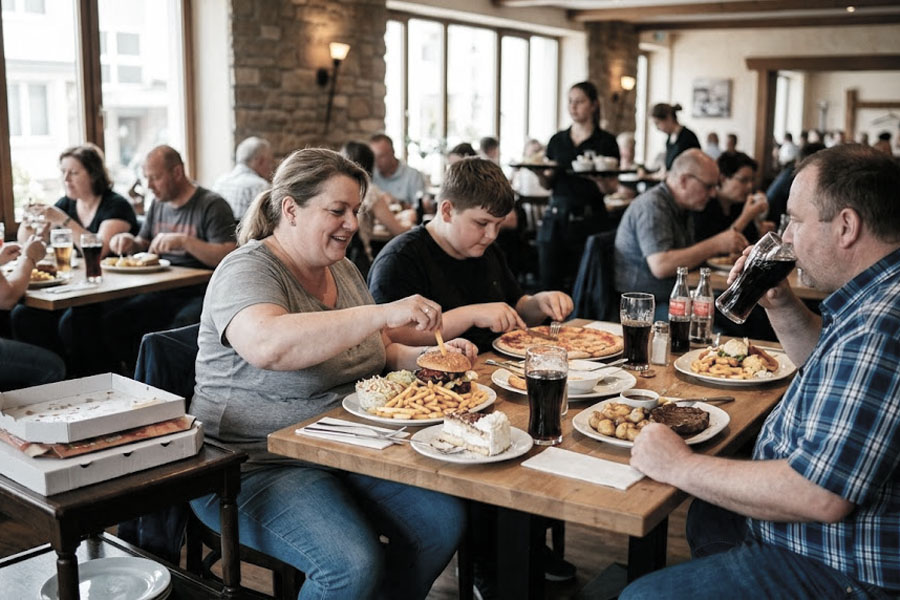
The Dining Out Trap: Why Restaurant Meals Are the Secret Driver of the Global Obesity Epidemic
For the modern urbanite, eating out is no longer a luxury—it is a daily necessity. The pace of life dictates the rules: business lunches, on-the-go snacks, and restaurant dinners have become the norm. However, behind the convenience and gastronomic pleasure lies a chilling set of statistics. Numerous studies confirm a direct correlation between the frequency of dining out and an increase in Body Mass Index (BMI). We are facing a “hidden calorie” phenomenon where even a seemingly healthy salad can contain a full day’s worth of fats. In this article, we will dissect the molecular and psychological mechanics of how the restaurant industry subtly rewires our metabolism and discover whether it is possible to maintain a lean physique without sacrificing your social life. This is the structural analysis of metabolic shift driven by modern lifestyle.
The Anatomy of a Restaurant Portion: More Than Your Body Can Process
One of the primary reasons eating out triggers obesity is the uncontrolled growth of portion sizes. Over the last 30 years, the size of a standard restaurant meal has increased 2-3 times, distorting our perception of a normal serving.
- The “Clean Plate” Effect: Most people subconsciously feel compelled to finish everything served, ignoring internal satiety signals.
- Energy Density: Restaurant meals typically contain 20-40% more calories per 100 grams compared to home-cooked food.
- Liquid Calories: Free refills of soda or oversized lattes can add between 200 and 500 “empty” calories to a single meal.
- The Health Halo Illusion: The presence of healthy options on a menu often tricks people into ordering extra high-calorie appetizers or desserts as a “reward” for choosing a light main.
The Triple Threat: Salt, Sugar, and Fats as the Foundation of “Tasty” Menus
The restaurant business is built on taste, not the long-term health of the customer. To ensure a guest returns, chefs utilize a “holy trinity” of attractants that trigger dopamine responses and stimulate overeating.
- Hyper-palatability: The combination of high fat and high sugar makes food hyper-attractive to the brain, overriding natural appetite control mechanisms.
- Hidden Trans Fats: Using cheap vegetable oils for frying and sauces boosts caloric density while promoting systemic inflammation.
- Sodium Overload: Excessive sodium causes water retention and heightens thirst, which is often misinterpreted by the brain as hunger.
Comparative Analysis: Home-Cooked Meals vs. Restaurant Counterparts
To illustrate the scale of the issue, we have compiled a table comparing the nutritional values of typical dishes prepared at home versus those ordered at popular chain establishments.
| Dish (Standard Serving) | Calories (Home) | Calories (Restaurant) | Fat Difference (%) | Sugar Content |
|---|---|---|---|---|
| Beef Burger | 450 kcal | 850–1100 kcal | +120% | High (bun, sauce) |
| Pasta Carbonara | 550 kcal | 950–1200 kcal | +80% | Medium |
| Caesar Salad | 320 kcal | 750–900 kcal | +150% | High (dressing) |
| Steak with Vegetables | 400 kcal | 700–850 kcal | +50% (butter finish) | Low |
| Chicken Sandwich | 350 kcal | 650 kcal | +70% | High |
The Psychology of the “Treat”: Why We Lose Vigilance Away from Home
Eating out is often tied to a social context that shuts down cognitive control over food intake. Social facilitation causes us to eat more simply because we are not alone.
- The Group Effect: Research shows that dining with one friend increases food intake by 33%, while a group of seven or more can increase it by 96%.
- “Vacation Mode”: We tend to view dining out as a reward, giving us psychological permission to order dessert or alcohol.
- Visual Marketing: Beautiful plating and professional food photography in menus stimulate appetite long before the food reaches the table.
Modern Impact: Obesity as a Side Effect of Urbanization
The global shift toward eating out is not just a change in habit; it is a fundamental challenge for public health systems. The proliferation of fast-food outlets within walking distance correlates directly with the prevalence of Type 2 diabetes.
- Food Deserts: In some areas, finding fresh produce is harder than buying fast food, making obesity a disproportionate problem for lower-income populations.
- The Economy of Cheap Calories: High-calorie processed food is often cheaper than a balanced home-cooked meal, incentivizing unhealthy choices.
- The Delivery Culture: The rise of delivery apps has blurred the line between “out-of-home” and home dining, bringing restaurant-level calories directly to the couch.
Survival Protocol: How to Minimize Harm When Dining Out
Completely avoiding restaurants is neither possible nor necessary. The goal is to learn how to “read” the menu and manage your choices effectively.
- The Sauce Rule: Always ask for sauces on the side. This can save up to 300 calories per meal.
- The Half-Portion Method: Ask the server to box half your meal before it even reaches the table.
- Prioritize Fiber: Start your meal with a green salad (no dressing) to create bulk in the stomach and lower the glycemic index of the following course.
- The Water Barrier: Drink a glass of water before ordering to distinguish between false hunger and thirst.
FAQ: Frequently Asked Questions about Eating Out and Obesity
- Is restaurant food really unhealthier than home-cooked food? Yes, in most cases. Restaurants use more fats, sugars, and salt to enhance flavor, significantly increasing calorie counts.
- Can I lose weight while eating exclusively at restaurants? Yes, but it requires extreme discipline, calorie counting, and choosing grilled items without sauces.
- Why are restaurant salads often higher in calories than burgers? Because of heavy mayonnaise-based dressings, croutons, bacon bits, and cheese, which turn a light dish into a calorie bomb.
- How often can I eat out without gaining weight? For most, 1-2 times per week is a safe limit, provided your other meals are balanced.
- Does fast food affect children more than adults? Yes, children lack self-regulation mechanisms, and early exposure to hyper-palatable food leads to childhood obesity.
- Do calorie counts on menus help people make healthier choices? Studies show mixed results, but for conscious consumers, it acts as a significant deterrent.
- Why do I feel hungry so soon after a restaurant meal? High levels of refined carbs and sugar cause an insulin spike followed by a rapid drop in blood glucose.
- Which cuisines are the “riskiest” for weight gain? American (fast food), certain Italian styles (creamy pastas), and Chinese (deep-fried, sugary sauces) are typically the highest in calories.
- Does eating on the go contribute to obesity? Yes, when eating in a rush, the brain fails to register satiety signals in time, leading to overconsumption.
- How does alcohol at a restaurant impact weight gain? It adds empty calories and lowers inhibitions, often leading to ordering more fat-heavy and salty foods.