
The Myth of the Static Brain
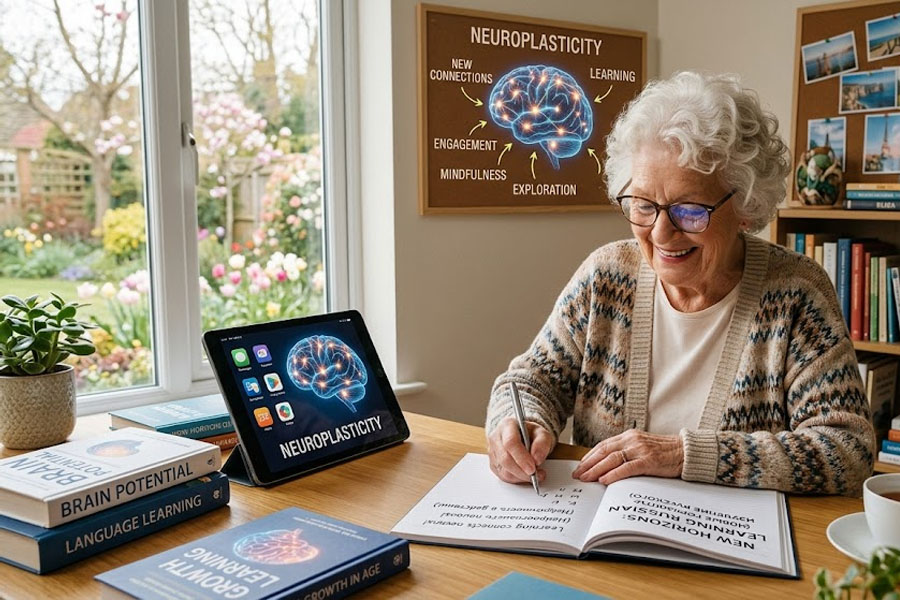
For a long time, many believed that our brains stopped developing after a certain age. However, modern science has debunked the myth of “quiet aging,” proving that the brain remains a dynamic organ capable of change throughout our lives. This phenomenon is known as neuroplasticity—the brain’s ability to reorganize itself by forming new neural connections. Our neural pathways are not fixed; rather, the brain allocates resources to the connections we frequently stimulate and eliminates those it deems less useful. This means that in our 60s, 70s, and beyond, we still hold the “remote control” for our cognitive health.
The Superpower of New Languages and Skills
One of the most effective ways to stimulate neuroplasticity is by stepping out of our comfort zones. Learning a new language or a complex skill acts as a high-intensity workout for the mind.
- Cognitive Challenge: Engaging in reading, learning new skills, or taking classes forces the brain to build new “circuits”.
- The “Use It or Lose It” Principle: Cognitive abilities that we do not actively reinforce tend to decline as neural connections receive less stimulation.
- Resilience: Regular mental stimulation helps the brain adapt to and resist age-related changes, such as declining analytical abilities.
Hobbies: More Than Just a Pastime
Finding a new hobby is not just about filling time; it is a core habit shared by the world’s longest-lived people in the “Blue Zones”. Whether it is starting a garden, joining a book club, or learning a musical instrument, these activities provide a unique blend of mental engagement and joy.
- Social Connection: Many hobbies are inherently social. Interacting with others in a community group or a “Silver Circle” club requires the brain to process information, remember context, and respond appropriately—all of which keep the mind sharp.
- Emotional Balance: Activities that stimulate creativity enrich our inner world and positively influence emotional balance and overall quality of life.
Conclusion: It’s Never Too Late to Start
As Stanford Medicine clinicians emphasize, it is never too late to adopt habits that protect your cognitive health. Programs like Brainergize 60+ utilize “mental gymnastics”—such as puzzles, categorization tasks, and decision-making exercises—to keep the nervous system active and maintain independence. By embracing new hobbies and challenges, you aren’t just passing the time; you are actively building a stronger, more resilient brain.