
The Hidden Cost of a Bad Night
Many people view sleep as a luxury or a period of “downward time,” but the biological reality is far more expensive. In the United States alone, the indirect healthcare costs associated with chronic conditions exacerbated by a lack of proper sleep are estimated at $2,124 per year for those affected. Poor sleep is not just about being tired; it is a gateway to hypertension, heart disease, stroke, diabetes, anxiety, and depression.
The 280% ROI: Sleep as a Financial Asset
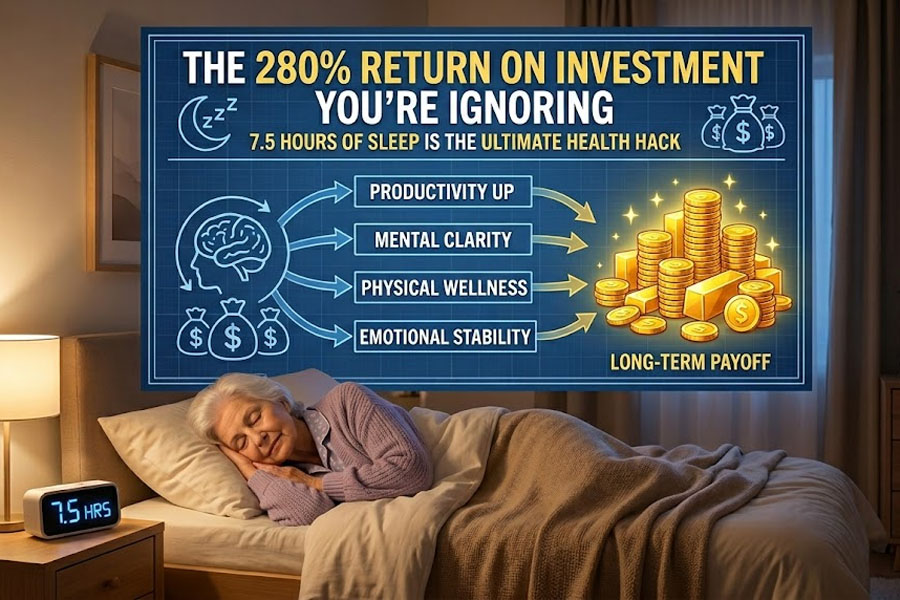
Recent clinical research highlighted in a Doctor of Nursing Practice project demonstrated a staggering economic benefit to sleep hygiene. Implementing a nurse-led sleep protocol for older adults yielded a 280% Return on Investment (ROI). This means that for every dollar spent on educating a senior about better sleep habits, the family saved $3.80 in avoided medical complications and emergency room visits.
The Happiness Gap: The 30% Rule
Science has found a direct correlation between the clock and your mood. People who sleep only 6 hours a night are 30% less happy than those who get adequate rest. The “gold standard” for maintaining peak immune function and emotional resilience is 7.5 hours of sleep per night. Falling below this threshold triggers fatigue and play a role in negative quality of life perceptions.
The Non-Drug Toolkit for Better Rest
Experts from Blue Zones and Get Full Care emphasize non-pharmacological approaches, as older adults are more sensitive to the side effects of sleeping pills. To optimize your “Sleep Hygiene,” consider these proven methods:
- The “Downshift” Ritual: Follow the example of Sardinian centenarians with a daily ritual to reverse stress-induced inflammation—whether it’s a quiet nature walk or a “happy hour” with friends.
- Physical Environmental Changes: Use a “sleep kit” including eye masks and earplugs to block external stimuli.
- Strategic Movement: Engage in at least 30 minutes of regular activity daily, but avoid heavy exercise right before bed. Even “morning exercises” done in bed can help set the body’s rhythm.
- The “Wait to Brush” Hack: Stanford clinicians suggest pairing balance training (like standing on one leg) with brushing your teeth—a simple way to move more without adding “work” to your day.
Ready to start your 280% recovery? The path to active longevity doesn’t start in the gym—it starts with the lights off.