


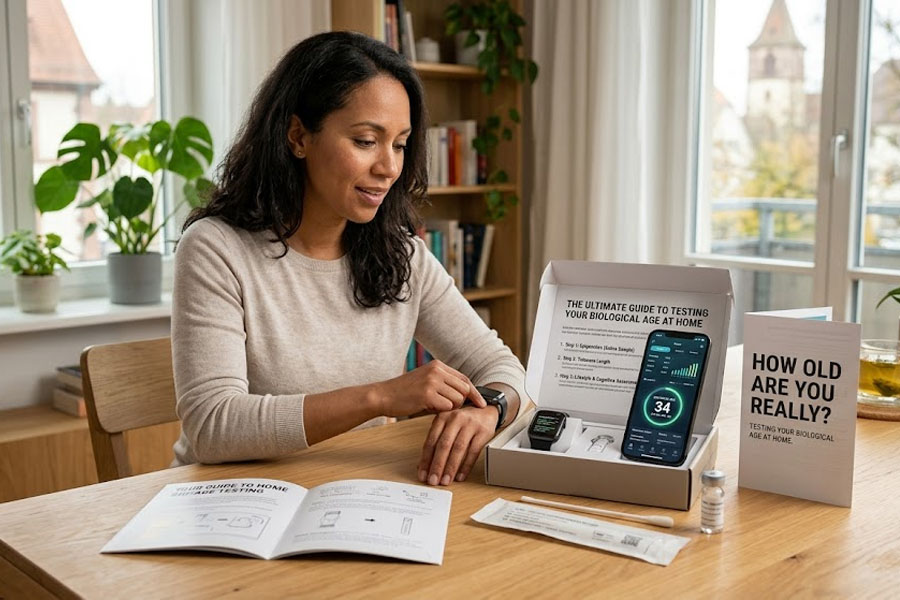
Chronological age is merely the time you’ve spent on Earth, but biological age represents how your body is actually functioning. While clinical data like blood work and imaging are the gold standards, you can establish a powerful health baseline for free using simple, research-backed home tests.
1. Cardiovascular Health and Vascular Aging
The phrase “you are as old as your arteries” holds deep scientific truth. Vascular aging (VA) reflects the wear and tear of your body based on the stiffness of your arterial walls.
- The Squat Pulse Test: Measure your pulse, perform 30 dynamic squats, and check the difference. A recovery gap of 10–20 beats suggests a biological age in your 30s, while over 40 beats may indicate a state closer to 60 years old.
- Vascular Stiffness: Modern technologies like pulse wave velocity (PWV) analysis measure how fast blood travels through your vessels. An increase of just 1 m/s in pulse wave velocity raises cardiovascular risk by 15%.
2. Respiratory Capacity: The Stange and Genchi Tests
Your lungs and heart health are primary indicators of longevity.
- Stange Test (Inhale Hold): Take a deep breath and hold. A healthy result is 40–60 seconds. Highly trained individuals can exceed 90 seconds.
- Genchi Test (Exhale Hold): Hold your breath after a full exhalation. A normal range is 10–20 seconds. Training your breath hold builds CO2 tolerance, which improves physical resilience and calms the nervous system.
3. Strength and Functional Mobility
Muscle mass and mobility are critical for preventing injury and maintaining independence as you age.
- The Sit-Rise Test: Sit on the floor cross-legged and try to stand up without using your hands, knees, or elbows for support. A perfect score of 10/10 indicates excellent functional youth.
- Grip Strength: A simple marker of total body strength is the ability to crush an empty aluminum can with one hand. In clinical settings, a grip strength of over 91 lbs for women is considered “off the charts”.
- Upper Body Power: For a 30-year-old female, doing more than 8 continuous push-ups signifies a younger biological age.
4. Balance and Neurological Health
Coordination reflects the health of your brain, inner ear, and joints.
- The Blind Flamingo: Stand on one leg with your eyes closed. Maintaining this for over 30 seconds is typical for a 20-year-old, while under 10 seconds is associated with an age of 60+.
- Tapping Test: To test the speed of your nervous system, tap a key (like a spacebar) as fast as possible for 30 seconds. Over 70 taps is considered excellent.
5. Body Composition and Proportions
Visual markers and ratios can signal metabolic health.
- Waist-to-Height Ratio: Aim for a ratio below 0.5 to minimize visceral fat risks.
- Skin Elasticity: Pinch the skin on your wrist for 5 seconds. If it returns to normal in under 5 seconds, your skin age is likely under 30.
Conclusion: The Game of Improvement
If your results aren’t where you want them to be, don’t be discouraged. Biological age is a dynamic metric. Through consistent aerobic training, flexibility exercises, and breathwork, you can systematically lower your biological age and improve your “human dolphin” potential