


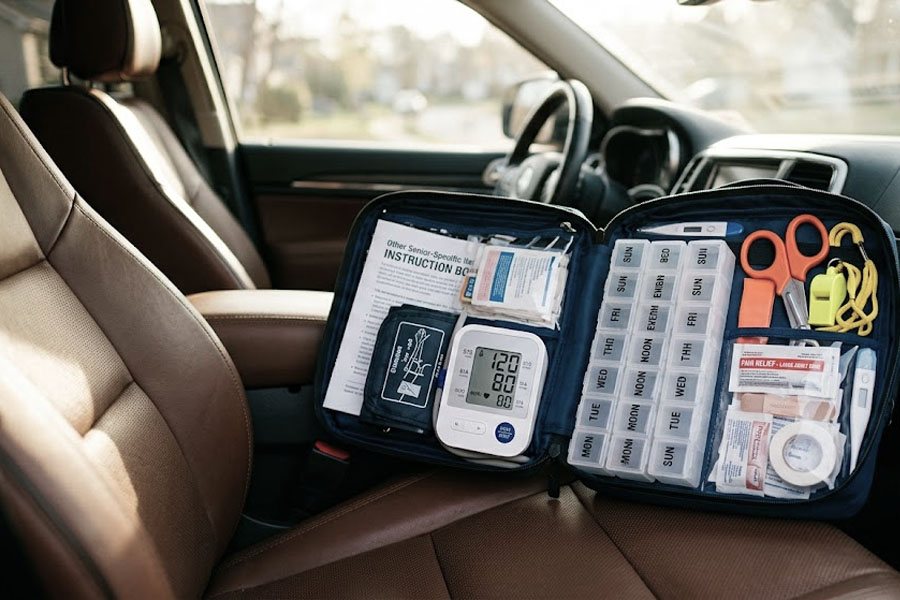
Car First Aid Kit for Seniors: The Ultimate Guide to Road Safety
Driving provides a sense of independence that is vital for the quality of life of older adults in the United States. However, as we age, physical changes can make road trips more challenging. A well-prepared car first aid kit for seniors is not just a convenience; it is a critical safety net. According to the NHTSA, there are over 47 million licensed drivers aged 65 and older in the US, making senior-specific road safety a top priority.
Why Every Senior Needs a Specialized Car First Aid Kit
Standard off-the-shelf first aid kits often lack the specific items required for age-related health conditions. For older drivers, a medical emergency on the road—whether it is a minor cut or a sudden drop in blood sugar—requires immediate and specific intervention. A customized car first aid kit for seniors addresses these unique needs by including chronic medication backups and easy-to-use diagnostic tools.
Adapting to Physical Changes
As we age, our skin becomes thinner and more prone to tearing, and our bodies may take longer to heal. A standard adhesive bandage might not be enough. Seniors need specialized silicone-based adhesives that do not damage fragile skin, as well as more comprehensive wound care supplies that can be managed even with limited manual dexterity.
Essential Medical Supplies for Older Drivers
When building a car first aid kit for seniors, you must look beyond the basics. Here is a checklist of essential items tailored for the American senior driver:
- Easy-Grip Tools: Medical scissors with large loops and tweezers with ergonomic grips are essential for those with arthritis.
- Advanced Wound Care: Include non-stick sterile pads, cohesive wrap (which sticks to itself, not the skin), and antiseptic sprays rather than wipes to minimize friction.
- Diagnostic Devices: A portable, wrist-style blood pressure monitor and a reliable pulse oximeter are invaluable for monitoring vitals during a roadside rest.
- Vision Aids: A high-power magnifying glass and a high-lumen LED flashlight are necessary for reading small print on medication labels or inspecting wounds in low light.
Medication Management and Documentation
The most critical component of a car first aid kit for seniors is the medication management section. Many seniors take multiple prescriptions (polypharmacy), making it vital to have an organized system in the vehicle.
The Emergency Medical File
Every kit should contain a waterproof pouch holding a printed list of:
- Current medications and dosages.
- Known allergies (especially to latex or specific antibiotics).
- Contact information for primary care physicians.
- Copies of insurance cards and a living will or DNR (if applicable).
Pro Tip: In the US, many emergency responders look for a ‘File of Life’ sticker on the driver’s side window or a corresponding folder in the glove box.
Temperature-Sensitive Medications
If you carry insulin or other temperature-sensitive drugs, your car first aid kit for seniors should include a small, insulated cooling bag. Remember that car interiors in states like Arizona or Florida can reach over 150°F, which can quickly degrade medication efficacy.
US Regulations and Safety Recommendations
In the United States, organizations like the AARP and the American Red Cross provide guidelines for senior driver safety. While there is no federal law mandating a specific car first aid kit for seniors, several states recommend specific emergency preparedness items for winter driving or long-distance travel across rural areas.
Ensure your kit includes a $20–$50 emergency cash reserve in small bills for situations where credit card systems might be down, or for small roadside services where digital payment isn’t an option.
Maintenance: Keeping Your Kit Ready
A car first aid kit for seniors is only useful if the items inside are functional and within their expiration dates. We recommend a semi-annual check—coinciding with the start and end of Daylight Saving Time. Check for expired ointments, depleted batteries in flashlights, and the integrity of sterile packaging which can be compromised by the extreme temperature cycles inside a vehicle.
Frequently Asked Questions (FAQ)
Questions and Answers about Senior Car Kits
- What is the most important item in a car first aid kit for seniors? While bandages are common, a comprehensive list of current medications and doctor contacts is the most critical item for emergency responders.
- Should I keep a glucose monitor in the car? If the driver is diabetic, yes. However, ensure the test strips are stored within the manufacturer’s recommended temperature range to ensure accuracy.
- Are there specific bandages for elderly skin? Yes, look for ‘silicone adhesive’ or ‘sensitive skin’ bandages that provide a secure hold without causing skin tears upon removal.
- How often should I update the medical information in the kit? You should update the information every time there is a change in prescription or at least every six months.
- Can I buy a pre-made car first aid kit for seniors? Most kits are generic. It is best to buy a high-quality standard kit and then customize it with the specialized items mentioned in this guide.
- Focus on ergonomic tools for those with arthritis.
- Include an emergency ‘File of Life’ document.
- Prioritize temperature control for medications.
- Update the kit every 6 months during Daylight Saving Time.
- Use silicone adhesives to protect fragile skin.