


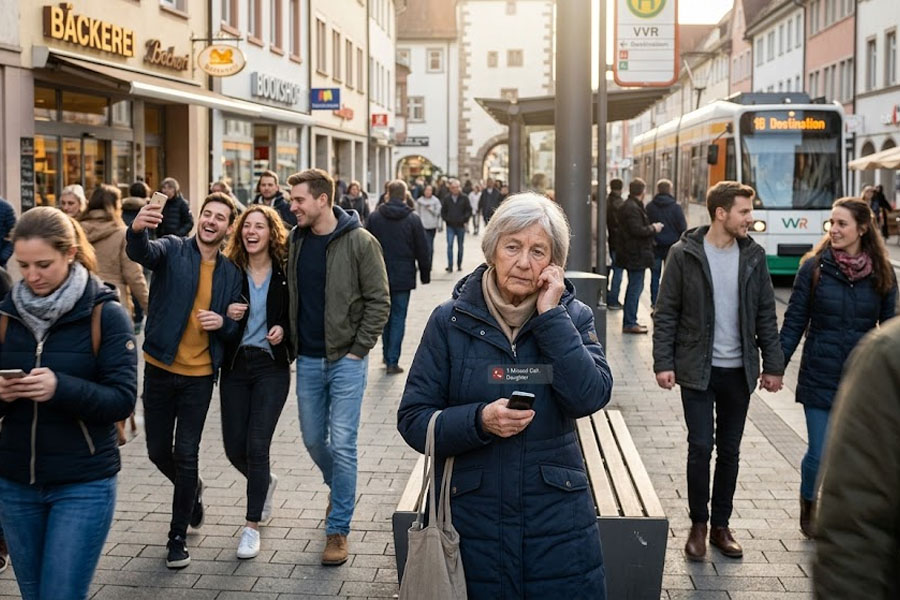
The Invisible Wall of Emotional Isolation
Emotional isolation is a silent epidemic. It is a state where a person may have an extensive social network yet feels completely separated from others. Research shows that one in five middle-aged and elderly men in certain populations are emotionally isolated, defined as having no one in whom they can confide. This lack of connection is not just a “sad feeling”—it changes the brain. Studies from the University of Chicago show that the brains of lonely individuals react less to pleasant images in the ventral striatum, the brain’s reward center, making it harder for them to feel joy from love or social interaction.
The Cruel Paradox of Parent-Child Bonds
Psychology identifies a “cruel paradox” in the relationship between aging parents and adult children: the more desperately a parent needs to feel loved, the more invisible pressure that need creates. This pressure acts as emotional extortion, often pushing children away even when the parent says nothing. Interestingly, research found that adult children providing daily emotional support often experience increased cortisol levels and negative moods, suggesting that the “burden” of a parent’s emotional survival can be biologically taxing. The parents who eventually feel most loved are often those who find a way to stop “needing” it first, releasing their children from the burden of their happiness.
The “Sandwich Generation” and the Caregiver’s Cry
Many middle-aged adults today belong to the “sandwich generation,” squeezed between the demands of their own children and their aging parents. The toll is immense: caregivers spend an average of 1,350 hours annually providing care, leading to high risks of burnout and depression. A common plea from primary caregivers to their siblings is simple: “Just call your mom”. Even a 20-minute weekly call can significantly reduce the mental load on the primary caregiver and provide the parent with much-needed stimulation.
The Path to Healthy Aging
How do we fix this? Data from China indicates that monthly contact with adult children is often the most appropriate rhythm, maintaining a balance between intimacy and independence that promotes healthy aging.
Beyond family, “social prescribing” is becoming a global solution. Instead of pills, doctors “prescribe” community connections, such as:
- Helping Others: Engaging lonely seniors in volunteering roles. Research shows that helping others is one of the most powerful ways to alleviate one’s own loneliness.
- Digital Connections: Using the internet to maintain social contact can reduce loneliness, provided it is used to enhance real-world relationships rather than replace them.
- Nature Prescribing: Spending time in “green” or “blue” spaces (parks or near water) has been shown to improve mental health and foster social interaction.
To truly belong, one must often look outward. By finding meaning in community, nature, or service, aging parents can transform their relationships from ones of obligation to ones of choice.