

The Olympics of Idleness: Why Seoul’s Sleep Competitions Became a Radical Act of Social Rebellion
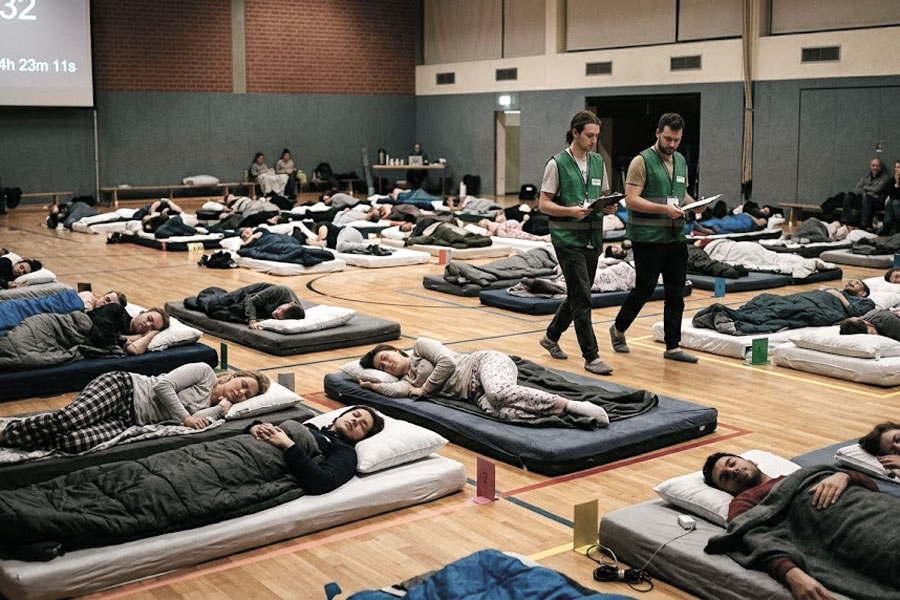
In a city that never sleeps and where the cult of productivity is elevated to an absolute, something unimaginable has occurred. In the heart of Seoul, official competitions for sleep and “zoning out” took place. Hundreds of participants gathered to demonstrate their ability to completely disconnect from reality amidst the extreme stress of the metropolis. This is not just a quirky flash mob, but a profound social statement and a new milestone in our understanding of modern mental health.
The “Kwarosa” Phenomenon: Why South Korea Chose to Nap Officially
South Korea is famous for its extreme work ethic. The term “kwarosa” (death from overwork) is not just a scary word here, but a grim reality. The sleep and Space-out Competitions emerged as a reaction of the body and psyche to the endless race for success. In this section, we examine the roots of this movement [1, 3].
- Burnout Crisis: Over 70% of Seoul’s working population reports chronic fatigue.
- “Pali-pali” Culture: The South Korean concept of “hurry-hurry,” which forces people to live in a state of constant time deficit.
- Rehabilitating Rest: An attempt to destigmatize laziness and show that rest is not a waste of time but a necessary investment in the brain.
- Digital Detox: The competitions require total abandonment of gadgets, a feat in itself for the residents of the world’s most technological country.
Rules of the Game: Measuring the Depth of Peace
This isn’t just “lying on the grass.” The Seoul competitions have a strict set of regulations that make the process scientifically grounded and competitive. Judges monitor the physiological indicators of participants, turning rest into a high-tech process [2].
- Heart Rate Monitoring: Every 15 minutes, participants’ heart rates are checked. The winner is the one whose heart rate graph remains the most stable and low.
- Activity Ban: Checking phones, talking, laughing, or using any form of entertainment is strictly prohibited.
- Visual Control: Participants must maintain total stillness and a “spaced-out” gaze.
- Audience Vote: The public chooses favorites based on their ability to remain unperturbed.
Comparative Analytics: Productivity vs. Radical Rest
To understand the effect of controlled rest on the body compared to the usual work rhythm, we have compiled an analytical data table [2, 3].
| Parameter | “Pali-pali” Mode (Work) | “Space-out” Mode (Competition) | Health Impact |
|---|---|---|---|
| Cortisol Level | Critically High | 30-40% Reduction | Immune System Boost |
| Brain Activity | Beta Waves (Tension) | Alpha and Theta Waves (Relax) | Neuron Restoration |
| Focus | Scattered (Multitasking) | Deep Internal | Memory Improvement |
| Heart Rhythm | Tachycardia (90+ bpm avg) | Resting Bradycardia (60-65 bpm) | Lower Heart Attack Risk |
Woops Yang’s Philosophy: The Art of Being Useless
The movement’s founder, artist Woops Yang, created this competition after experiencing severe burnout herself. Her idea is that modern people feel guilty when they are doing nothing. The competition legitimizes this state, turning “uselessness” into an achievement [1].
- Creating a “community of idlers” where collective inaction provides a sense of security.
- Visually transforming people into “living monuments” to rest.
- Using urban spaces (parks, squares) usually associated with movement for a complete standstill.
Impact on Modernity: Why the World Needs the Seoul Experience
Seoul’s sleep and zoning-out competitions have gone viral and started spreading globally. Cognitive psychologists argue that the brain in its “wandering” state (default mode network) makes its most significant discoveries. Without such pauses, creativity and critical thinking simply atrophy [3].
- Implementation of “quiet hours” in major corporations (Google, Samsung).
- Growth in the popularity of mindfulness practices through the lens of a competitive element.
- Revision of labor laws in several Asian countries toward reducing overwork.
FAQ: Frequently Asked Questions about Seoul’s Sleep Competitions
- What is the difference between sleeping and “spacing out”? In a classic Nap Contest, you must actually sleep, whereas in the Space-out Competition, you must remain awake while maintaining a total mental void.
- Who can participate? Anyone who passes preliminary screening and demonstrates a high level of stress or motivation.
- What is the grand prize? The winner receives a trophy in the shape of Rodin’s “The Thinker” and, more importantly, public recognition for their mastery of rest.
- Is it really good for the brain? Yes, switching to a resting state allows the brain to clear metabolic waste and restore neural connections.
- Why does this happen in Seoul? Due to the world’s highest levels of work-related stress and the need for radical coping methods.
- Can you eat or drink during the contest? No, any action that interrupts the trance-like state is prohibited.
- How long does the competition last? Typically, a session lasts 90 minutes, corresponding to a cycle of deep restoration.
- Does it help with insomnia? Not directly, but learning deep relaxation techniques significantly improves sleep quality in the long run.
- Are there similar events in other countries? Yes, similar contests have already taken place in Beijing, Tokyo, and Paris under the Korean license.
- Is this considered an official sport? Not yet, but organizers are striving for “mental athletics” to be recognized as a vital discipline of the future.