
The Science of the Supernatural: Why Our Brains See Ghosts and Believe in Magic
In the United States, a staggering 60% of people claim to have had a paranormal experience, with “feeling a presence” being the most common occurrence. While these encounters feel undeniably real, modern science offers a “spooky” yet grounded explanation for why our minds convince us that we are not alone. From the chemistry of our brains to the physics of sound, the supernatural is often just a byproduct of a misunderstood natural world.
The “Creepy” Frequency: Infrasound and Haunted Houses
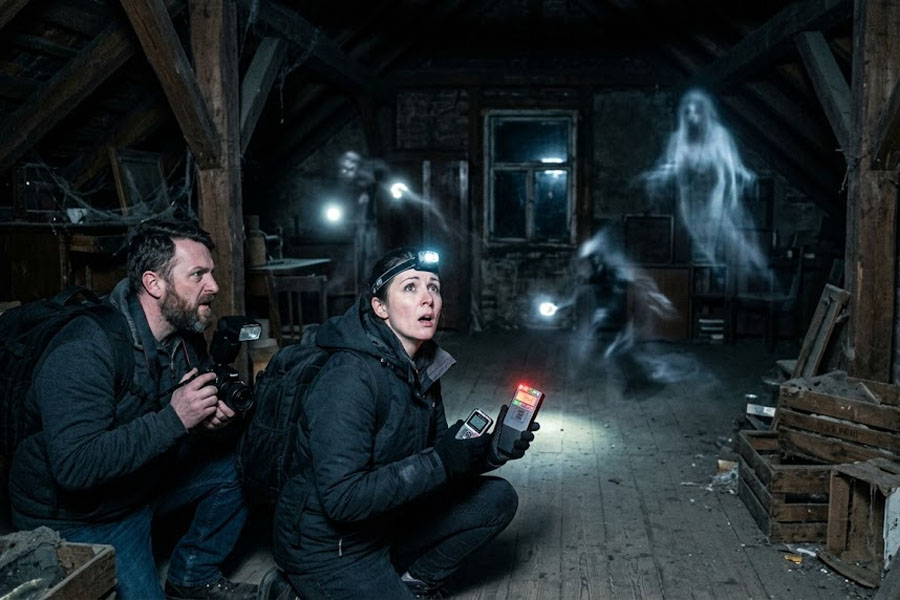
Have you ever walked into a room and felt a sudden chill or the sensation that you’re being watched? Research from MacEwan University suggests that infrasound—sound frequencies at 18 Hz or lower, which are below the threshold of human hearing—can trigger these feelings. Exposure to infrasound can increase cortisol levels (a stress marker) and cause irritability or unexplained discomfort. These “secret sounds” don’t make people see ghosts directly, but they create a physical state of anxiety that the brain often interprets as a paranormal presence.
The Demon in the Bedroom: Sleep Paralysis
Perhaps the most terrifying paranormal encounter is sleep paralysis. Historically interpreted as a “demon on the chest” or an alien abduction, this phenomenon is actually a biological glitch where the brain’s REM (rapid eye movement) phase intrudes into wakefulness. During REM sleep, the body is naturally paralyzed (muscle atonia) to prevent us from acting out our dreams. If you wake up before this “switch” is turned off, you find yourself paralyzed and often experience hypnopompic hallucinations. This state often includes the vision of a “shadow person” and a feeling of suffocation due to the accumulation of carbon dioxide and reduced breathing muscle activity during REM sleep.
Voices from Beyond or Audio Rorschach?
The Electronic Voice Phenomenon (EVP)—the appearance of human-like voices on audio recordings—is frequently cited by ghost hunters as proof of the afterlife. However, scientists view this through the lens of auditory pareidolia or apophenia. Our brains have evolved to find patterns in random noise to help us survive. Just as we see faces in clouds, we “hear” words in static or white noise. This is essentially an “audio Rorschach test,” where what we hear depends entirely on our own expectations and language.
Why Horoscopes Always Feel Accurate: The Barnum Effect
If you’ve ever felt a personality test or a horoscope was “perfectly tailored” to you, you’ve experienced the Barnum effect (also known as the Forer effect). This psychological phenomenon occurs when individuals give high accuracy ratings to vague, general descriptions that could apply to almost anyone. Phrases like “at times you are extroverted, while at other times you are introverted” are so broad that the brain reads personal meaning into them. This effect is a primary reason why practices like astrology and cold reading remain popular despite a lack of scientific evidence.
The Two Systems of Thought
Psychologist Daniel Kahneman identifies two systems in the human brain: System 1 (fast, emotional, and automatic) and System 2 (slow, analytical, and reflective). Most of our “paranormal” beliefs come from System 1, which uses heuristics to make quick sense of the world, especially in times of uncertainty. Cognitive biases, such as confirmation bias (seeking only what supports our beliefs) or personalization (thinking external events are about us), often lead System 1 to reach supernatural conclusions before the analytical System 2 has a chance to intervene.
Conclusion: The Value of Scientific Skepticism
Scientific skepticism is not about automatically rejecting the unusual; it is a commitment to evidence and reason. As the US-based Committee for Skeptical Inquiry (CSI) promotes, “extraordinary claims require extraordinary evidence”. By understanding the physiological and psychological mechanisms behind our experiences, we can move from fear of the unknown to a deeper appreciation for the complexities of the human brain.