


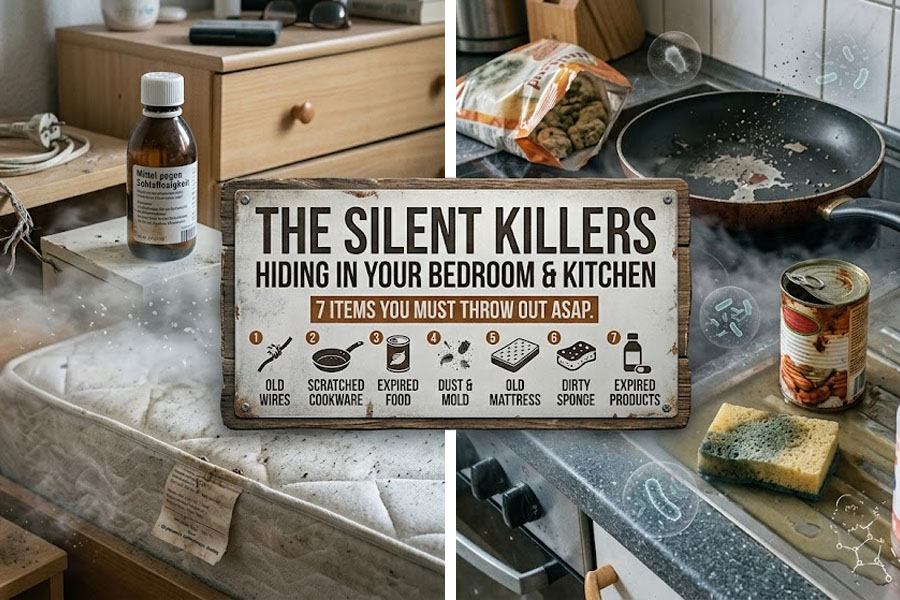
The Silent Killers Hiding in Your Bedroom and Kitchen: 7 Items You Must Throw Out ASAP
1. Your 2-Year-Old Pillow: A Fungal Wasteland
You might love your pillow, but after two years, it’s no longer just a pillow. Dr. Saurabh Sethi, a Harvard-trained gastroenterologist, warns that pillows accumulate dust mites, sweat, and allergens. Research shows that used pillows can contain thousands of fungal spores per gram, with Aspergillus fumigatus being a common and hazardous resident. Inhaling these allergens triggers chronic inflammation, allergic rhinitis, and asthma. The Rule: Replace pillows every 1–2 years.
2. Synthetic Air Fresheners: Chemical Cocktails
That “fresh linen” scent is likely a toxic mix of Volatile Organic Compounds (VOCs). A study of 25 common fragranced products found they emitted over 133 different VOCs, including known carcinogens like benzene and formaldehyde—none of which were listed on the labels. Furthermore, 86% of air fresheners contain phthalates, which are linked to hormonal disruption and reproductive harm. Use essential oils or simply open a window instead.
3. The Kitchen Sponge: Dirtier Than a Toilet Seat
Microbiologists have calculated that a single square centimeter of a kitchen sponge can house up to 4 million bacteria. Its porous, moist structure is a “paradise” for pathogens like E. coli. Even if you don’t cook raw meat, the organic matter trapped inside allows colonies to explode within days. The Rule: Replace your sponge every 10 days, or disinfect it daily by boiling or microwaving it while wet.
4. Plastic Cutting Boards: You Are Eating Grams of Plastic
Every time you slice vegetables on a plastic board, you are creating microplastics. Research suggests a person could be exposed to 7.4–50.7 grams of microplastics annually just from their cutting board. These particles are finding their way into our organs, from the brain to the heart. The Solution: Switch to wood (like maple or walnut), which is naturally antibacterial and doesn’t shed plastic into your food.
5. Damaged Non-Stick Pans: Toxic Fumes
Non-stick coatings, often containing PTFE (Teflon), are safe only under 250°C. However, once the coating is scratched or overheated (above 400°C), it begins to break down and release toxic fumes. Inhaling these vapors can lead to polymer fume fever. If your pan is peeling or scratched, it is no longer a cooking tool—it’s a health hazard.
6. Worn-Out Mattresses: The Source of Chronic Pain
A mattress older than 7–10 years loses its ability to provide uniform support. When a mattress sags, it forces your spine out of neutral alignment, placing immense stress on your intervertebral discs and muscles. This isn’t just discomfort; it is a clinical contributor to musculoskeletal pathology and poor sleep quality.
7. The “Air-Purifying” Plant Myth
For years, we believed houseplants were nature’s air scrubbers. Scientists have now debunked this: the NASA studies were done in tiny, airtight containers that don’t reflect real homes. In a real room, an open window is ten to a thousand times more effective at removing toxins than a forest of indoor plants. Don’t rely on greenery to clean the air—rely on ventilation.